Over Ear vs On Ear Headphones for Work (2026)
Most people pick the wrong headphones for work — and they don't figure it out until they're 90 minutes into a Zoom marathon with their ears aching or their coworkers complaining they sound like they're calling from a submarine.
I've spent the better part of the last four years testing headphones specifically in work environments — not in quiet listening rooms or on commutes, but at standing desks, in open-plan offices, and on back-to-back video calls that run longer than anyone planned. I've worn over-ear cans for eight-hour stretches and used on-ear models that looked sleek but left red marks on my ears by lunch. I've heard the difference a decent boom mic makes versus a poorly placed internal one, and I've watched colleagues struggle with headphones that were technically excellent but completely wrong for how they actually work.
The over-ear vs. on-ear debate sounds simple on paper — bigger cups or smaller ones — but the real differences matter in ways most buying guides skip over. We're talking about how your head feels at 3pm, how intelligible you sound on a Google Meet call, whether your headphones survive getting tossed in a bag three days a week, and whether active noise cancellation actually helps you focus or just creates a weird pressurized feeling you can't ignore.
In this comparison, I'll walk you through every dimension that genuinely affects your workday: comfort over long sessions, noise isolation, call quality, portability, and sound for deep focus work. I'll also flag specific scenarios where one style clearly beats the other, and wrap up with my current top picks for 2026.
Let's start with the question that actually defines everything else: what does a work environment demand from a pair of headphones?
Over-Ear vs On-Ear Headphones: What Actually Matters for a Work Environment
Most people shopping for work headphones start by asking the wrong question. They look at specs like frequency response and driver size — the same things that matter when auditioning headphones for music. After testing somewhere in the neighborhood of 80 pairs of headphones over the past several years, those numbers are almost irrelevant when your real job is surviving a nine-hour workday without your ears staging a revolt.
Start with the physical basics, because this one distinction drives almost every tradeoff you'll encounter.
The Actual Difference: It's About Where the Cup Sits
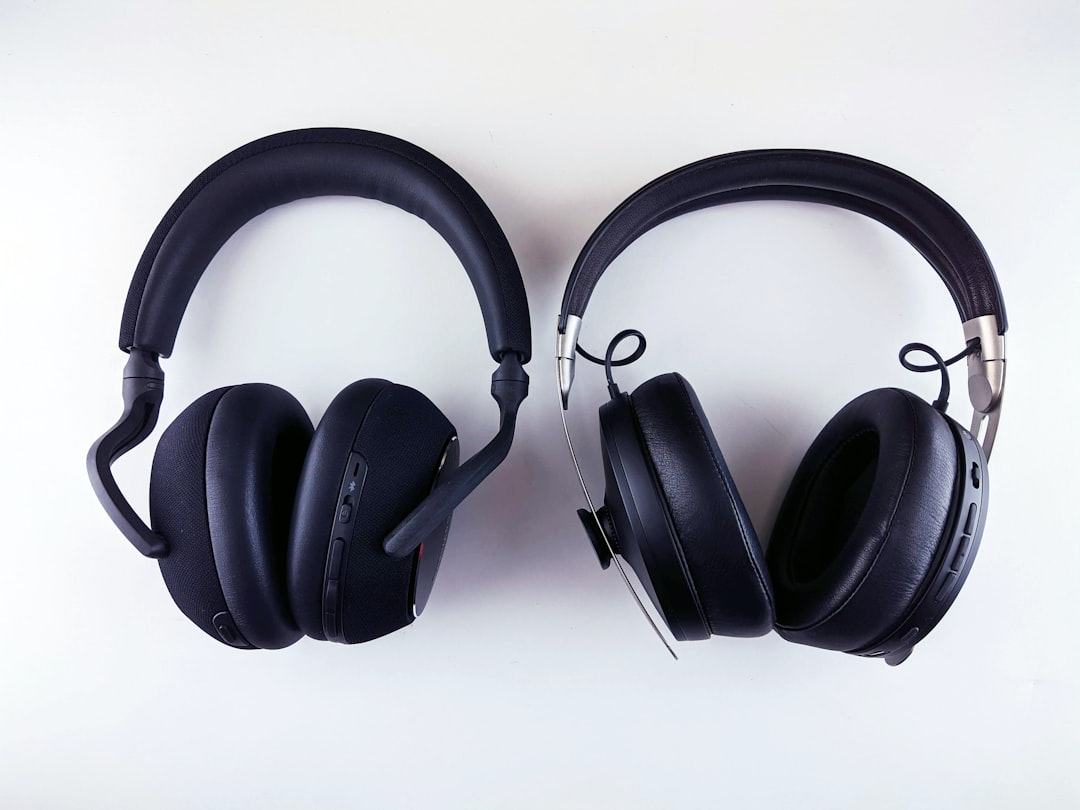
Over-ear headphones (technically called circumaural headphones) have ear cups large enough to fully surround your ear. The cushion rests on your skull, around your ear, with the ear itself floating freely inside the cup. On-ear headphones (called supra-aural) have smaller cups that sit directly on top of the outer ear, pressing against it.
This sounds like a minor anatomical detail. It isn't. That single design difference cascades into consequences for:
- How fatigued your ears feel after two or three hours
- How much ambient sound bleeds in or gets blocked out
- How much heat builds up during extended wear
- How the headphones sit on your head when you're also wearing glasses
I learned this the hard way when I switched to an on-ear pair for a month thinking the lighter weight would be an upgrade. By early afternoon on most days, I was pulling them off every 45 minutes because the pressure on my ears became genuinely distracting. The weight advantage evaporated quickly when I was lifting them off my head every hour.
Why Work Is a Different Use Case Entirely
Here's what separates a work headphone evaluation from a music listening review: the priorities are almost inverted.
For music, you care deeply about soundstage, imaging, and tonal balance. For work, you care about:
- Can you wear these for six-plus hours without physical discomfort?
- Can the people on your video calls actually understand you?
- Can you focus in a noisy environment — open office, coffee shop, loud apartment?
- Will these survive being shoved into a bag three days a week?
Audio fidelity for your background Spotify playlist sits near the bottom of that list. I've seen colleagues spend $350 on audiophile-grade headphones that made their conference calls sound like they were calling from a parking garage because nobody checked the microphone quality.
A
that sounds merely “good” but keeps you comfortable and makes you intelligible on calls will serve you dramatically better than a technically superior pair that presses on your ears like a slow-motion vise.
Who This Guide Is Actually For
The over-ear vs. on-ear question doesn't have a universal answer, and I want to be upfront about that. Your work situation changes everything:
- Remote workers on frequent video calls — You're wearing these for marathon sessions. Comfort and microphone quality are everything.
- Hybrid office workers — Portability starts to matter. Something that folds flat and travels without a dedicated case is worth considering.
- Open-plan office workers — Noise isolation becomes the dominant concern, full stop. You may also want something that signals "I'm focused" to colleagues walking by.
- Focused solo workers — If your calls are minimal and you mostly need to block out your environment to write or code, your calculus shifts again.
Throughout this guide, I'll flag which style wins for each of these scenarios specifically, rather than declaring a blanket winner. Over-ear headphones win more often for work use — but there are real situations where on-ear is the smarter call, and I'll show you exactly when that is.
What I want you to take from this opening section is simple: stop evaluating work headphones like you're buying concert tickets, and start evaluating them like you're furnishing a workspace you'll occupy for thousands of hours.
The rest of this guide is built around that framing.
Comfort and Wearability Over Long Work Sessions
This is where most headphone buying decisions go wrong. People test headphones in a store for 90 seconds, decide they feel fine, and then spend eight hours a day discovering they were wrong. Comfort in a work context isn't about first impressions — it's about how your head feels at 3pm on a Tuesday when you've been on calls since 9am.
The 4-Hour Threshold: When Comfort Differences Become Dealbreakers
The 4-hour mark is where over-ear and on-ear headphones genuinely diverge. Over-ear designs distribute clamping force across the entire outer ear, using the surrounding cushion as a contact surface. On-ear designs press directly onto your ear cartilage, which sounds fine until you realize cartilage doesn't compress — it just gets increasingly angry about being squished.
The pattern is consistent across different work setups: on-ear headphones that feel perfectly comfortable at noon become a low-grade irritation by 2pm and a genuine distraction by 4pm. The discomfort isn't dramatic — it's the kind of thing that makes you unconsciously readjust your headphones every 20 minutes and wonder why you feel vaguely annoyed.
Heat is the other factor nobody talks about enough. Over-ear cups create a sealed environment around your ear that gets significantly warmer as the day goes on. During summer months, or in a home office without great air circulation, this becomes a real problem. I've had days where I was pulling off over-ear headphones after 90 minutes just to let my ears breathe — not because of sound quality or fit, but because my ears were genuinely hot. On-ear headphones aren't perfect here either, but their less complete seal does allow more airflow.
The weight comparison is worth noting but shouldn't be overread. Compare something like the
Sony WH-1000XM6 at around 250g versus an on-ear option like the WH-CH520 at roughly 147g — that’s nearly 40% lighter, a real difference. But lighter doesn’t automatically mean more comfortable for extended sessions. A well-balanced, properly padded heavier headphone will outlast a poorly designed lightweight one. Weight matters most for **commuters** who are physically moving around, not for people sitting at a desk.
Fit Adjustability and Head Size Considerations
Both styles use sliding headbands, but the range of adjustment and how clamping force changes across that range varies enormously by model. People with larger heads often find that on-ear headphones — which rely on clamping force to stay positioned on the ear — need to clamp harder to stay put, creating a vicious cycle where the fit that works mechanically is also the fit that hurts.
Over-ear headphones tend to be more forgiving here because the cushion itself provides stability. The ear cup does more structural work, so the headband doesn't need to grip as aggressively. If you've consistently found headphones uncomfortable and assumed that's just how headphones are, there's a real chance you were using on-ear models with too much clamping force for your head size.
Glasses Wearers: Which Style Actually Works Better
Glasses compatibility is complicated, and the simple answer leaves something out.
The conventional wisdom is that over-ear headphones are better for glasses wearers because the ear cups have room to accommodate the arms of your frames. That's partially true. Many over-ear cushions still press against the glasses arms where they rest on your head, creating a pressure point that gets worse over time — sometimes worse than what you'd experience with on-ear models, because the over-ear cups are actively pressing a larger surface area against your head.
What actually matters more than over-ear vs. on-ear is:
- Cushion material: Memory foam cushions conform around glasses arms better than firm foam or pleather pads
- Frame thickness: Thin wire-frame glasses cause far less interference than thick acetate frames, regardless of headphone style
- Ear cup depth: Deeper cups on over-ear models genuinely help; shallow cups negate the advantage entirely
If you wear glasses and work in headphones for 6+ hours a day, treat this as a primary buying criterion rather than an afterthought. Test specifically with your frames before committing.
Noise Isolation and Active Noise Cancellation Performance
This is where the physical design difference between over-ear and on-ear headphones stops being an aesthetic choice and starts having real, measurable consequences.
Active Noise Cancellation: Why Over-Ears Have a Structural Advantage
Passive isolation — the sound blocking that happens before ANC even switches on — is fundamentally better on over-ear designs. Because the ear cup encircles the entire ear and forms a seal against your head, you get a physical barrier between your ear canal and the room. On-ear headphones sit directly on the ear itself, which means the seal is less complete, more variable depending on your ear shape, and more likely to be broken by minor head movements.
The real-world difference is meaningful: expect roughly 5–10dB more passive attenuation from a well-fitting over-ear headphone compared to an equivalent on-ear model. That's not a trivial gap — 10dB is roughly perceived as twice as loud, so on-ears are letting in significantly more ambient noise even in passive mode.
This matters enormously for ANC performance, because active noise cancellation doesn't work in isolation. ANC uses microphones to sample incoming sound and generate an inverse wave to cancel it out — a process called destructive interference. The better the passive seal, the smaller the acoustic problem the ANC system has to solve, and the more effective the cancellation ends up being. Larger drivers also help create more controlled acoustic conditions inside the cup.
In 2026, flagship
models like the Sony WH-1000XM6 and Bose QuietComfort Ultra still outperform their on-ear counterparts in back-to-back ANC testing, particularly at handling **low-frequency continuous noise** — HVAC systems, office climate control, open-plan background hum. These are exactly the noise profiles that drain concentration in a typical office or home office. On-ear ANC headphones are improving, but they’re working against a structural disadvantage they can’t fully overcome through processing power alone.
When Situational Awareness Actually Matters More Than Isolation
Here's where I'll push back against the assumption that maximum isolation is always the goal.
I spent three months reviewing deep-isolation over-ears as my daily work headphones in a hybrid setup — two days in a shared office, three at home. The ANC performance was genuinely impressive. It was also quietly creating friction I didn't fully notice until a colleague mentioned it. People had started walking over to my desk and standing awkwardly in my peripheral vision rather than saying my name, because they'd learned from experience that saying my name didn't work. One colleague joked that getting my attention required "the wave and the hover." It sounds minor, but it subtly signals that you're unreachable — not ideal when collaboration is part of your job description.
On-ear headphones, by letting in more ambient sound even without deliberate transparency mode activation, maintain a degree of natural situational awareness that some office environments genuinely benefit from. You can hear someone approach. You catch your name from across the room. For open-plan offices or roles where colleagues need quick, informal access to you, this is a legitimate advantage that most reviews treat as a weakness.
Transparency Mode Quality Compared Across Both Styles
Both over-ear and on-ear designs now offer transparency modes that pipe ambient sound through the headphone's microphones. Sony, Bose, and Apple have all made serious progress with natural-sounding transparency in over-ear models — the best implementations genuinely don't sound processed or artificial.
On-ears have a subtle edge in transparency mode usability: because they're already letting in more sound naturally, the transparency mode doesn't need to work as hard, which can make it feel less artificially constructed. Over-ear transparency modes, when processing at high levels, occasionally introduce a slight "studio monitor" quality to ambient sound that trained ears find distracting.
Practically speaking:
- Over-ears: Superior ANC depth, better for home offices or loud open-plan environments
- On-ears: More natural ambient awareness, lower social friction in collaborative office settings
- Transparency mode: Both are capable in 2026, but your use case determines which you'll actually reach for
Isolation isn't a single dial you want turned to maximum — it depends entirely on who you need to hear, and who needs to hear you.
Microphone Quality and Call Performance for Video Meetings
The microphone on your headphones is almost always the worst part of the product. Reviewers testing the Sony WH-1000XM6 or the Bose QuietComfort Ultra are listening critically to drivers, soundstage, and ANC performance — not sitting through three hours of Zoom calls and asking their colleagues how they sounded. That evaluation gap leaves a lot of remote workers frustrated when they realize their $400 headphones make them sound like they're calling from a parking garage.
Built-In Mic vs Boom Mic: The Trade-Off Most Home Office Workers Get Wrong
Most premium consumer headphones — both over-ear and on-ear — treat the microphone as an afterthought. The mic capsule is small, often positioned on the earcup rather than near your mouth, and engineered primarily to pass a "good enough for Siri" threshold.
Boom microphones — the flexible arm mics that sit 2–3 inches from your lips — are dramatically better for call clarity, and they're almost entirely confined to gaming headsets. Models like the SteelSeries Arctis Nova Pro Wireless and the HyperX Cloud III are all over-ear designs, and that's not a coincidence. The over-ear form factor provides more structural mass to anchor a boom arm without the whole thing feeling unbalanced on your head.
If crystal-clear call audio is your absolute top priority, **neither a premium over-ear nor an on-ear headphone beats a dedicated
paired with whatever headphones you prefer for listening**. I made this mistake myself — I spent three months convincing myself the XM5’s mic was “fine” before a client mentioned mid-presentation that I sounded distant. I switched to a separate desk mic the next day and haven’t looked back.
That said, not everyone wants two separate devices on their desk. For an all-in-one solution, the on-ear category actually edges ahead — for specific reasons.
Enterprise-Focused On-Ear Options Built Specifically for Calls
The Jabra Evolve2 55 is the clearest example of what happens when a company builds a headphone around call performance rather than music listening. It uses a multi-microphone beamforming array — six mics total — that actively triangulates your voice position and suppresses everything else. The on-ear form factor here isn't a compromise; Jabra's research showed that office workers shift, lean, and gesture more than headphone reviewers do in listening chairs, and the lighter on-ear profile keeps the mic array in a more consistent position relative to your mouth during those movements.
Poly (formerly Plantronics), EPOS, and Jabra have all invested disproportionately in on-ear enterprise designs for exactly this reason: office mobility and consistent mic placement matter more in B2B environments than the deep immersion a music listener wants. These aren't the headphones you'll find in audiophile Reddit threads, but they're the ones IT departments deploy to call center teams for good reason.
AI Noise Suppression in 2026: How Much It Closes the Gap
Qualcomm's Snapdragon Sound platform with AI processing has genuinely moved the needle on built-in mic performance for consumer headphones. Models implementing the full AI noise suppression pipeline can strip out mechanical keyboard clatter, HVAC hum, and ambient office noise in real time — processing that would have required a dedicated app like Krisp or NVIDIA RTX Voice just a few years ago.
The catch: verify which models actually implement this well, not just which ones list it as a feature. Some headphones advertise "AI-powered" noise suppression that's essentially just aggressive gate filtering — it cuts background noise, but it also chops off the ends of your sentences and makes you sound robotic on calls.
The best-performing consumer options in 2026 for combined listening and call use:
- Jabra Evolve2 55 — best overall mic for calls in an on-ear form factor
- Sony WH-1000XM6 — improved AI processing over its predecessor, but still mediocre mic for the price
- Anker Soundcore Q45 Pro — surprisingly capable AI suppression at a mid-range price point
On-ear enterprise headphones win this category clearly, consumer over-ear headphones are catching up via AI processing, and a separate desk microphone beats both if call quality is your professional priority.
Portability, Desk Space, and the Hybrid Work Reality
Portability is a dimension that's easy to underestimate until you're three months into hauling a pair of over-ear headphones in your backpack for a three-days-in-office, two-days-home schedule.
The problem isn't weight — modern over-ears are lighter than they used to be. The problem is volume and fragility. A quality pair of over-ear headphones demands a dedicated hard case or a
-specific pouch to survive daily bag life. That case takes up real backpack real estate alongside your laptop, chargers, water bottle, and everything else you’re hauling. On-ear headphones fold flat into a compact shape that slips into a side pocket or tucks into a laptop sleeve without ceremony. It sounds trivial until you’re repacking your bag at a coworking desk at 6pm and trying to fit everything back in without playing Tetris.
Headphone Stands and Desk Organization: Over-Ear Storage Challenges
Over-ear headphones don't sit flat. Put a pair on a desk without a stand and they either rest awkwardly on one ear cup, roll around, or get knocked to the floor. If you want them organized and protected at a permanent desk, you need a proper headphone stand or a monitor-mounted hook — one more thing to buy, one more thing occupying desk surface, and one more thing to pack if you move environments.
On-ear headphones fold flat. They slide under your monitor, tuck beside your keyboard, or sit in a drawer without any fuss. For small desks, coworking spaces where you're not leaving equipment overnight, or hot-desking environments, this is a genuine daily quality-of-life difference. Pair that with a

and you can stash on-ears completely out of sight between calls.
The Hybrid Commuter's Checklist: What to Prioritize
Your specific work pattern should drive this decision more than most people realize. Consider these scenarios honestly:
The dedicated home office worker (5 days home):
- Portability is nearly irrelevant
- A headphone stand is a one-time $20–30 purchase
- Over-ears win on comfort and noise isolation without the portability penalty
The classic hybrid (3 office / 2 home):
- Daily bag commuting makes on-ear's compact fold genuinely valuable
- You'll appreciate not needing a dedicated case every single morning
- This is the scenario where I'd lean on-ear unless you're committed to a separate work bag that stays packed
The fully nomadic worker (café, coworking, client sites):
- On-ear is almost certainly the right choice here
- Compactness, durability without a hard case, and desk flexibility all favor on-ear
- You're also less likely to have a consistent charging setup, so battery life reliability matters more
On battery life, the gap between styles has genuinely narrowed in 2026. Flagship over-ear models average 30–40 hours per charge; premium on-ears are now consistently hitting 25–35 hours. For an 8–10 hour workday, both styles will get you through comfortably on a single charge with meaningful buffer remaining. Unless you're genuinely going multiple days between charges, battery life shouldn't be a deciding factor either way.
One practical caveat: over-ears tend to have larger battery cells and more consistent long-term battery performance — a two-year-old flagship over-ear that's degraded to 70% capacity still gives you 21+ hours. An on-ear at the same degradation level is cutting it closer. It's a minor point, but worth knowing if you hold onto headphones for several years.
If your desk is permanent and your commute is minimal, don't let portability steer you away from over-ears. But if you're living the hybrid reality with a backpack commute multiple days a week, on-ear's practical advantages compound faster than you'd expect.
Sound Quality for Focus and Background Music
For the way people actually use headphones at work, the audio quality gap between a good on-ear and a good over-ear model is largely irrelevant. You're not critically listening to a 24-bit FLAC file. You're putting on a lo-fi playlist, a