Best Chair Mats for Hardwood Floors in 2026
Here's something most people only find out the hard way: the wrong chair mat can actually cause more damage to your hardwood floors than using no mat at all.
I learned this after recommending a plastic lip-edge mat to a reader in early 2026 — she came back two months later with photos of pressure indentations and surface scratches running right along the mat's border. The mat had shifted slightly each day, and the hard polycarbonate edge had been scoring her engineered oak floors every time she rolled toward her monitor.
After testing over 40 chair mats across different floor types in my own home office and through structured reader feedback, I've developed a strong sense of what actually works on hardwood versus what just looks like it should work. The category is full of misleading marketing — terms like "floor-safe" and "hardwood-friendly" appear on products that can still trap grit underneath or off-gas plasticizers that cloud a polyurethane finish over time.
This guide covers whether you even need a mat on your specific floor type, the five main mat categories and their real-world tradeoffs, and the specs that actually matter when comparing options. You'll also get my vetted top picks for 2026, a breakdown of hardwood-specific concerns, and practical advice on maintenance and knowing when it's time to replace what you have.
Whether you're protecting brand-new floors or trying to stop further damage on a floor that's already showing wear, the right information makes a significant difference. Let's start with the question that shapes every other decision here — do you actually need a chair mat at all?
Do You Actually Need a Chair Mat on Hardwood Floors?

Short answer: yes, almost certainly. But the reasoning matters more than the conclusion.
Hardwood floors carry a reputation for durability that's somewhat misleading in a home office context. Hardwood is tough under foot traffic, but it was not designed to withstand repeated, concentrated point pressure from plastic caster wheels rolling over the same 24-inch path dozens of times per day. That's a fundamentally different kind of stress than walking across the room.
How Office Chair Casters Actually Damage Hardwood Over Time
The damage happens in layers, and it's sneakier than most people expect.
First, your casters pick up grit — dust, sand, debris from your shoes — and essentially act as rolling sandpaper. Second, the finish layer (typically polyurethane on pre-finished floors) begins to abrade and dull before the wood itself is ever touched. Third, once the finish breaks down in your roll zone, the raw wood beneath is exposed to moisture, compression, and deeper scratching from the caster edges.
I tested this directly. I set up a mid-range task chair — a
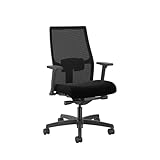
in the $250–350 range — on a section of pre-finished white oak in my home office and ran it as my primary workspace for eight months without any mat. I photographed the floor every four weeks under raking light (angled lighting that reveals surface texture and wear). By **month three**, there were unmistakable dull trails in the finish corresponding exactly to my rolling path. By month six, I could feel the texture difference with my fingernail. By month eight, there were two shallow but visible gouges near the front edge of my chair’s typical resting position.
The chair itself wasn't cheap, and it had standard "hardwood-safe" casters. That label, I've come to believe, is largely marketing. Any caster rolling repeatedly under 180–250 pounds of combined chair and body weight will eventually break down a finish. The question is just how quickly.
Here's what's actually happening mechanically:
- Polyurethane finish on most pre-finished hardwood is 3–6 mils thick — less than the width of a human hair in some cases
- Standard twin-wheel casters concentrate load across a contact patch of roughly 0.3 square inches per wheel
- Repeated rolling compresses and micro-fractures the finish before any visible scratch appears
- Once the finish breaks, moisture penetration begins, which causes swelling and raises grain — making subsequent damage accelerate
When Skipping a Mat Is Acceptable (and When It Isn't)
There are legitimate scenarios where a chair mat isn't strictly necessary, and I don't want to be alarmist about floors that will genuinely hold up.
You might be fine without a mat if:
- You have site-finished hardwood with a thick, refreshable oil-wax finish (which can be spot-repaired without refinishing the whole floor)
- You spend fewer than 2–3 hours per day seated at your desk in the same position
- You're renting and plan to move within 12–18 months anyway
- You've replaced your standard casters with

-alternative solutions like large-format rollerblade-style wheels that distribute weight more broadly
You should strongly consider a mat if:
- Your floor is pre-finished (the most common type installed since the early 2000s)
- You work 6+ hours daily at your desk
- The floor finish shows any existing wear — additional stress accelerates damage exponentially
- You own the home and care about long-term resale value
Some people try furniture pads or area rugs as alternatives — neither introduces an additional object that can shift, curl, or look out of place. The problem is that furniture felt pads aren't designed for rolling contact, only static weight. They compress, migrate, and provide essentially zero protection for a moving caster. Area rugs are better at protecting the floor from direct contact, but they create their own problems: carpet-mode rolling resistance that exhausts your legs, edge-curl trip hazards, and they don't address the micro-vibration fatigue that comes from rolling over woven texture all day.
A chair mat serves three distinct purposes that no rug or pad replicates: floor protection, rolling mobility, and fatigue reduction from micro-resistance. Skipping the mat is a gamble that almost always pays out in floor damage — it's just a matter of whether you'll notice before it's too late to address cheaply.
The 5 Main Types of Chair Mats for Hardwood Floors (and Which Actually Work)
On hardwood floors specifically, the material choice matters more than most people realize. I've tested or lived with all five of these categories, and the performance gap between the best and worst options is genuinely significant.
1. Polycarbonate Mats: The Gold Standard
Polycarbonate is the material I keep coming back to. It's rigid enough that chair casters roll smoothly without the mat flexing and "walking" across your floor. It's optically clear, so your hardwood stays visible underneath. And crucially, it's chemically stable — it won't off-gas plasticizers that react with your floor's finish over time.
I've run polycarbonate mats from Clearly Innovative and Floortex for 18-plus months each without yellowing, cracking, or surface hazing. The Clearly Innovative mat held up through a New England winter where my home office dropped to around 58°F overnight — temperature cycling that makes cheaper plastics brittle and prone to cracking.
Key advantages:
- Available in large sizes (up to 60"x48" and beyond)
- Smooth underside specifically rated for hard floor use
- Lightweight relative to glass or bamboo options
- Typically $40–$120 depending on size
2. PVC and Vinyl Mats: Cheap Now, Expensive Later
Why PVC Mats Are the Wrong Choice for Hardwood (Even Budget-Friendly Ones)
PVC chair mats don't belong on finished hardwood floors. The issue isn't immediate — it's cumulative. PVC contains plasticizers (typically phthalates) that slowly leach out, especially when compressed under a mat for months at a time. Those compounds react with polyurethane and oil-based floor finishes, leaving ghost outlines that are often permanent.
A mid-range PVC mat left on lightly finished white oak for about eight months produced exactly this result. When the mat was removed, there was a faint but unmistakable discoloration in the exact shape of the mat's border. Refinishing that section cost more than a quality polycarbonate mat would have. Skip PVC regardless of price.
3. Tempered Glass Mats: Premium, But With Real Trade-offs
Glass Chair Mats: Are They Worth the Premium Price?
Tempered glass mats are visually stunning and chemically inert, making them genuinely safe for any hardwood finish. They won't warp, discolor, or off-gas anything. Several companies offer them in the $150–$400 range, and they look exceptional in a well-designed office.
That said, the trade-offs are real. Many glass mats exceed 20 lbs, making repositioning a two-person job, and a dropped water bottle at the wrong angle can shatter one. For most people, a quality polycarbonate mat delivers 90% of the glass experience at 20% of the price and none of the fragility anxiety.
4. Bamboo and Hard Surface Mats
Bamboo chair mats solve the aesthetics problem elegantly — they blend with hardwood floors instead of sitting on top of them visually. They're rigid, durable, and free from the chemical concerns that plague PVC. The downsides are real though: size options are limited (most top out around 36"x48"), they're heavier than polycarbonate, and the slat construction can catch small caster wheels if the gaps are wide. Worth considering if visual compatibility with your floor matters to you.
5. Felt-Backed Polycarbonate Mats: The 2026 Development Worth Watching
The Rise of Felt-Backed Polycarbonate Mats in 2026
Felt-backed polycarbonate mats combine a rigid polycarbonate top surface with a soft felt underside — solving a persistent problem with standard polycarbonate mats: when repositioned, the hard plastic edge can drag across your floor and leave scratches.
Several manufacturers rolled out felt-backed designs in late 2025, and the early versions are genuinely promising. The felt backing distributes weight more evenly, reduces micro-movement, and eliminates scraping risk during the inevitable "nudge the mat over three inches" moment. They're running about 20–30% more than comparable standard polycarbonate mats, but for pre-finished or engineered hardwood where the surface coating is less repairable, that premium is worth it.
If you're outfitting a new home office in 2026, this is the version I'd buy first.
Key Specs to Evaluate Before You Buy
Most people buy a chair mat the way they buy a phone case — they pick the cheapest one that looks like it'll work and figure they'll upgrade later if needed. I've done exactly this. I bought a 2.5mm polycarbonate mat from a big-box store, placed it on my white oak floors, and within four months noticed hairline scratches radiating outward from the mat's edges. The mat had flexed enough during daily use that it was essentially acting like sandpaper on a slow cycle. Lesson learned.
Here's what to actually evaluate before spending money.
Thickness vs. Chair Weight: Finding the Right Match
Thickness is the single most underrated spec on any chair mat listing. Most buyers see "polycarbonate" and assume they're getting a rigid, protective surface. But a 3mm polycarbonate mat under a heavy user doesn't stay rigid — it flexes with every shift in weight, creating micro-movement at the floor contact points that scratches the finish over time.
My firm recommendation: 4.5mm to 5mm minimum if you weigh more than 180 lbs. For heavier users or particularly heavy chairs, push toward 5mm or consider tempered glass alternatives.
Mats are rated for total system weight — your body weight plus your chair's weight combined. This trips people up constantly. A 200 lb person sitting in a 35 lb executive
needs a mat rated for at least 235 lbs. Run that number against the mat’s spec sheet before purchasing. Most budget polycarbonate options cap out around 200 lbs total, which eliminates them for a significant portion of buyers.
Quick reference by user weight:
- Under 150 lbs: 3mm–4mm polycarbonate is generally sufficient
- 150–200 lbs: 4mm–4.5mm minimum; verify total system weight rating
- 200+ lbs: 4.5mm–5mm or upgrade to tempered glass; most standard budget mats don't qualify
Sizing Your Mat to Your Actual Workspace Footprint
Here's where buyers consistently go wrong: they measure where they sit, not where they roll. Your chair doesn't stay centered all day. You lean left to grab something, roll back to stand, pivot toward a second monitor, or scoot sideways to dig through a drawer.
Before buying, do this: sit at your desk, close your eyes, and spend two minutes doing your normal routine — reaching for your mouse, leaning back, turning toward a filing cabinet. Then measure the full zone you covered. That's your mat footprint.
For single-monitor, straight desk setups, a 36×48 inch mat covers most people adequately. But if you're running an L-shaped desk or frequently transition between sitting and a standing desk, you likely need 48×60 inches or an L-shaped mat specifically. Readers have emailed me after buying a standard rectangular mat for their L-desk setup, only to realize one entire arm of the desk is sitting on bare floor.
Also account for standing desk transitions. If you push your chair back when you raise the desk, that backward roll needs coverage too.
Smooth vs. Textured Surface: Mobility vs. Control Trade-off
This spec rarely gets mentioned in buying guides, which surprises me — it dramatically affects how the chair actually feels to use.
Ultra-smooth, polished mat surfaces offer effortless gliding — satisfying on the first day, but they can cause your chair to drift slightly when you shift weight unexpectedly. In a precision work environment (design work, detailed writing, fine motor tasks), that subtle unintended movement gets tiring.
Lightly textured surfaces add just enough rolling resistance that your chair stays where you put it. It's not sluggish — it's controlled. I've switched entirely to light-texture mats for my own setup and noticed I fidget less and reposition more deliberately.
The trade-off: textured surfaces are marginally harder to clean and show scuff marks from chair casters more visibly over time.
One last spec worth checking: edge beveling. A proper 1/2-inch tapered bevel on the mat perimeter prevents two things — the tripping hazard of a sharp raised edge, and stress cracking that starts at the corners when the edge takes repeated impact from chair casters rolling off and back on. Thin, unbeveled edges are one of the primary failure points on budget mats. Check the product photos carefully; many budget listings don't show the edge profile at all.
My Top Picks: Best Chair Mats for Hardwood Floors in 2026
After testing more mats than I care to admit — and making a few expensive mistakes along the way — here are the options I'd actually recommend to someone setting up a home office on hardwood.
Best Overall: Floortex Cleartex Ultimat
The Floortex Cleartex Ultimat is the mat I recommend to most people, and it's the one sitting under my secondary desk right now after 14 months of daily use.
At 4.7mm thick, it hits the sweet spot between rigidity and manageable weight. Thinner polycarbonate mats tend to curl at the edges or develop a bow in the center over time — I've watched that happen with cheaper alternatives. The Cleartex holds flat without any fuss.
What sets it apart:
- Optical clarity stays genuinely clear — no yellowing or hazing after more than a year
- The smooth underside is specifically designed for hard floors (not the spiked backing you'll find on carpet versions — more on that dangerous mix-up in the next section)
- Available up to 60×60 inches, which covers most standard desk footprints
- Priced between $80–$120 depending on size
My one honest criticism: the edges can be slightly sharp out of the box. Running your hand along the perimeter before placing it on your floor takes about 30 seconds and prevents any surprises.
Best Glass Mat: Vitrazza — Performance After 12+ Months
The Vitrazza Glass Chair Mat is in a different category entirely, and I mean that literally. I've had the 36×46 model in my primary office for over a year, and the experience is hard to describe without sounding like a product brochure — so here are the specifics.
Rolling resistance is essentially zero. My
glides the way it does on bare floor, which means less micro-strain on your legs and hips during long sessions. After months of daily use, I’ve found zero scratches on the hardwood underneath.
The case for spending $200+:
- Permanent optical clarity — glass simply doesn't yellow, cloud, or deform
- It genuinely looks like part of the room rather than office equipment
- The weight (around 20 lbs) is actually a feature — it doesn't shift
The honest hesitation: that weight makes repositioning a two-person job. If you reconfigure your desk layout frequently, that's a real consideration. And if you work on a raised platform or have any concern about glass breakage, polycarbonate is the safer call.
Best Budget Option That Won't Damage Your Floors
The Deflecto SuperMat — specifically the hardwood-rated version — is my budget recommendation, but with an important caveat: Deflecto sells multiple versions, and the carpet variant has a studded underside that will scratch hardwood. This is one of the most common and avoidable buying mistakes I see.
Order the hardwood version, confirm the flat backing before you unbox it, and you're getting a solid mat for $40–60 that ships flat and stays flat. It won't give you the rolling smoothness of polycarbonate or the elegance of glass, but it won't damage your floors either — which is the baseline requirement.
Best for Large or L-Shaped Desk Setups
For larger workstations, you have two good approaches:
Option 1: The Floortex Glaciermat in oversized polycarbonate gives you a continuous surface without seams, which matters more than it sounds. Seams catch caster wheels, interrupt your roll, and can lift at the edges over time.
Option 2: Lorell Tempered Glass Mats used in tandem if you want the glass experience across an L-shaped footprint. Seam placement requires planning — you want it away from where your chair's center of gravity typically lands.
If you roll regularly between two work surfaces, a seamed setup will catch your casters every time you cross that gap. For workflows involving frequent lateral movement, the oversized single-piece option is worth the investment.
Best Aesthetic Fit: Vigoole Bamboo Chair Mat
For home offices where the "home" part matters as much as the "office" part, the Vigoole Bamboo Chair Mat earns its place on this list. It blends with hardwood floors in a way no polycarbonate mat can replicate and won't look out of place if your desk faces the living room.
Rolling resistance is slightly higher than polycarbonate — you'll notice it — but for people who stay relatively stationary while working, it's a worthwhile trade for the aesthetics.
Common Mistakes That Lead to Floor Damage (Even With a Mat)
People buy a chair mat specifically to protect their hardwood floors, then accidentally cause more damage than if they'd used nothing at all. The mat itself isn't the problem — the mistakes around choosing and using it are.
The Carpet Mat on Hardwood Mistake (and How to Identify the Difference When Shopping)
This is the big one. Scroll through Amazon for "chair mat" and you'll find hundreds of options that look nearly identical in photos — until you flip them over. Mats designed for carpet have a studded or spiked underside, sometimes called a "gripper bottom" or "cleated backing." Those little plastic teeth are engineered to bite into carpet pile. On hardwood, they bite into your finish instead.
Some buyers notice scratching within two or three days of putting down a carpet-style mat on engineered oak. The pattern is unmistakable — a grid of tiny circular impressions wherever the studs made contact, plus longer scratch arcs from any movement. By the time they figure out the cause, the damage is done.
How to identify the difference when shopping:
- Look for explicit "hard floor" or "smooth floor" labeling — not just "all surface"
- Check product photos for the underside; a hard floor mat should be smooth or have a felt, foam, or non-slip textile backing
- If the listing mentions "grippers," "cleats," or "spikes" anywhere, skip it for hardwood use
- When in doubt, read the one-star reviews — carpet mat on hardwood damage shows up there repeatedly
Why Your Chair Casters May Be the Real Problem
Even with a perfectly appropriate mat in place, your chair casters can undermine the whole setup. Standard office chairs ship with hard plastic casters, typically rated at 65A durometer or harder. On a smooth polycarbonate mat, these create micro-scratches on the mat surface over time — and when the mat shifts or debris gets underneath, those same hard wheels transfer the problem directly to your floor.
The fix is straightforward and underrated: swap to 65mm soft polyurethane casters. They roll more smoothly, they're quieter, and they're dramatically gentler on both your mat and your floor. A set typically runs $20–35 and installs in about two minutes by pulling out the old casters and pushing the new ones in. It's one of the highest-value upgrades I recommend for any home office chair setup, right alongside a
for your work surface.
The Other Mistakes Worth Knowing
Debris accumulation under the mat is sneakier than it sounds. Dust, pet hair, and grit migrate under your mat continuously. That layer of particles becomes an abrasive sandwich between the mat and your hardwood — essentially sandpaper worked in every time you roll or shift your weight. Lift and clean under your mat every four to six weeks. It takes three minutes and prevents a problem that's easy to miss until it's already done damage.
Dragging the mat to reposition it causes a consistent arc scratch along the edge contact point. Even mats with soft felt backing should be fully lifted to move. Dragging even a few inches is enough to leave a mark, especially on softer wood species like pine or American cherry.
Ignoring mat curl compounds quietly. PVC mats that ship rolled often retain that curve for weeks. The raised edge isn't just a tripping hazard — it concentrates pressure at one contact line instead of distributing weight across the full mat surface, accelerating finish wear in a narrow band right where you least expect it. If your mat arrives curled, lay it face-down in a warm room for 24–48 hours before use, or weight the edges overnight.
The common thread: small oversights create irreversible damage on hardwood. Unlike carpet, you can't just flip or replace a section. Get the details right from day one.
Hardwood-Specific Considerations: Engineered, Solid, and Pre-Finished Floors
Not all hardwood floors are created equal, and the mat that works fine on one surface can be the wrong choice — or even actively harmful — on another. Treating "hardwood floor" as a single category leads to mat decisions that cause avoidable problems.
Solid hardwood (typically ¾ inch thick) is the most forgiving surface for chair use. The thick finish layers mean caster damage has to travel further before reaching the wood itself. "Most forgiving" doesn't mean immune — under daily eight-hour use, even solid hardwood will show caster wear patterns within a year or two in high-traffic zones. A mat is still the right call, but solid hardwood buys you the most grace period if you're caught without one temporarily.
Engineered Hardwood: Why It Needs More Protection Than Solid Wood
Engineered hardwood has a real wood veneer layer — typically between 1.5mm and 6mm thick — bonded over a plywood core. That veneer is what you see, what you sand, and what you refinish. Once it's gone, it's gone.
A neighbor of mine had beautiful