Monitor Height Ergonomic Setup Guide 2026 | Reduce Neck Pain
Why Monitor Height Matters: The Ergonomic Foundation
If you’ve ever finished a workday with a stiff neck or tired eyes, your monitor height is probably to blame. The numbers tell a sobering story: 65% of office workers report symptoms directly related to poor monitor positioning. That’s nearly two out of every three people dealing with unnecessary discomfort simply because their screen sits at the wrong height.
The Science of Proper Viewing Angles
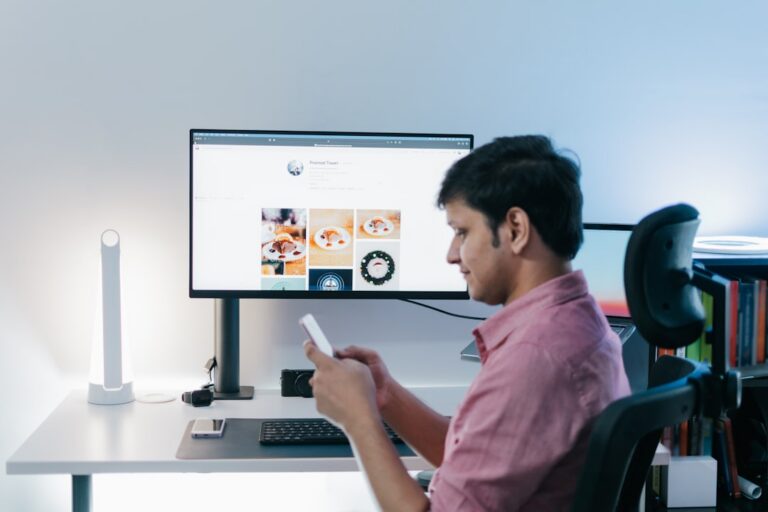
Your monitor should sit so that your eyes naturally look 10-20 degrees below horizontal eye level when viewing the top third of your screen. This isn’t arbitrary – it’s based on how our eyes and neck naturally function. When you look straight ahead or upward at a screen, your eyelids open wider, exposing more of your eye surface. This increases tear evaporation and forces your neck into an unnatural position.
A quality monitor arm makes achieving this angle straightforward, allowing precise height adjustments that fixed stands simply can’t match. For dual setups, a dual monitor stand keeps both screens at consistent, ergonomic heights.
The Real Cost of Poor Monitor Height
The long-term health impacts extend far beyond temporary discomfort. Cervical spine issues develop when your neck stays tilted for hours daily. These aren’t problems that appear overnight – they accumulate over months and years of poor positioning. Tension headaches become a regular companion, often starting at the base of your skull and radiating forward.
Perhaps most concerning is the productivity hit. When you’re constantly shifting to find a comfortable position or dealing with eye strain, your focus fragments. Studies show that workers with ergonomic monitor setups complete tasks 12-15% faster than those without proper positioning.
Your Whole Body Pays the Price
Monitor height creates a domino effect throughout your entire posture. When your screen sits too high, you tilt your head back, which arches your spine. Too low, and you hunch forward, rounding your shoulders and compressing your chest cavity. This affects your breathing, shoulder tension, and even lower back alignment.
An adjustable monitor riser offers a simple solution for laptops and monitors with limited built-in adjustment, bringing your screen to the proper height while maintaining desk space underneath for storage.
Fighting Eye Fatigue
Proper monitor height dramatically improves the effectiveness of the 20-20-20 rule (every 20 minutes, look at something 20 feet away for 20 seconds). When your monitor sits at the correct height, your eye muscles work less during those 20-minute intervals, making the breaks more restorative. The reduced strain means fewer dry eyes, less blurring, and decreased headaches by day’s end.
The bottom line: monitor height isn’t a luxury consideration – it’s a health fundamental. Getting it right from the start prevents problems that can take months to reverse.