Acoustic Foam Panels for Home Office Echo (2026 Guide)
The first time I recorded a video call from my home office, I nearly deleted the whole thing. My voice sounded like I was speaking inside a ceramic mixing bowl — every word followed by a faint, hollow twin of itself. I'd spent weeks picking the right monitor and microphone, and completely ignored the room itself. That's the mistake almost everyone makes.
Echo isn't a microphone problem. It isn't a software problem. It's a physics problem, and your empty, hard-walled home office is basically a machine designed to produce it.
I've spent the better part of six years testing acoustic treatments across a dozen different room setups — spare bedrooms, basement offices, converted garages, and one genuinely cursed open-plan loft that defeated everything I tried. Acoustic foam panels were always part of that process, and I've developed strong opinions about what actually works, what's a waste of money, and what the marketing around these products gets spectacularly wrong.
Here's what this guide will give you: a straight explanation of why your room sounds the way it does, how foam panels actually absorb sound (and what they physically cannot do, no matter how many you buy), which panel types and densities are worth buying in 2026, and exactly where to place them for results you'll notice on your first call back. I'll also cover installation methods that won't leave your walls looking like a lunar surface, and when foam alone isn't enough.
Before we start shopping or drilling anything into walls, it helps to understand why home offices sound so bad in the first place — and the answer is simpler than you might expect.
Why Your Home Office Sounds Terrible (And What's Actually Happening)

Most people assume their home office sounds bad because of a single, vague problem called "echo." What you're actually dealing with is likely one of three distinct acoustic phenomena — and conflating them is the reason most DIY treatments fail.
Flutter echo is that rapid, almost metallic slap you hear when sound bounces between two parallel hard surfaces. Room reverb is the general wash of sound that lingers after you stop speaking — your voice takes too long to decay into silence. Standing waves are different altogether: resonance patterns created when sound waves at specific frequencies bounce between walls and reinforce themselves, causing certain bass notes to seem unnaturally loud while others disappear. A small room typically has all three, layered on top of each other.
I noticed this when a colleague kept complaining that his podcast recordings sounded "weird and hollow" even after he'd bought a
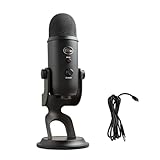
that cost over $200. The problem wasn’t his gear — his 10×10 spare bedroom was essentially a resonance chamber wrapped in drywall.
Hard vs. Soft Surfaces: Taking Inventory of Your Room
Before you buy a single panel, do a quick mental audit of everything in your workspace. The materials surrounding you determine how aggressively sound bounces around.
Highly reflective surfaces (the bad guys):
- Drywall and plaster walls
- Hardwood, laminate, or tile floors
- Glass windows — especially large ones
- Bare wooden or glass desktops
- Monitors and TV screens
- Whiteboards and glass-framed artwork
Sound-absorbing surfaces (the good guys):
- Upholstered office chairs
- Carpeting and area rugs
- Heavy curtains and drapes
- Bookshelves filled with books (irregular surfaces scatter sound)
- Fabric-covered furniture
A typical home office is almost entirely the first list. You've got four drywall surfaces, a hardwood floor, a window, and a monitor — and maybe a single padded chair doing all the acoustic heavy lifting. Sound launches off your mouth, ricochets off the desk, bounces off the window, catches the opposite wall, and arrives at your microphone a few milliseconds after the original wave. That delay smears voice clarity and creates the hollow, roomy quality that makes video calls exhausting.
Small square rooms make this dramatically worse. A 10×10 or 12×12 room has nearly identical distances between all sets of parallel walls, so standing wave resonances stack up at the same frequencies — the room rings like a tuning fork. A larger rectangular room at least staggers those resonance points, distributing the problem rather than concentrating it.
The Clap Test: A 10-Second Acoustic Diagnosis
The simplest diagnostic tool you have is your hands. Stand roughly in the center of your office, away from furniture, and clap once — sharply, like you're cracking a whip. Then listen carefully to what follows.
You're listening for the decay tail: the sound that persists after the initial clap. In a well-treated room, the clap sounds dry and immediate, dying out within a fraction of a second. In a problematic room, you'll hear one of a few things:
- A metallic ringing that lingers — classic flutter echo from parallel walls
- A wash or bloom of sound that slowly fades — room reverb
- An almost hollow resonance at a specific pitch — a standing wave
The threshold worth caring about: if the decay is audible longer than roughly 0.3 seconds, your room has a measurable echo problem. You don't need measuring equipment — if you can clearly hear the tail, it's long enough to affect your calls and recordings.
The real-world consequences go beyond bad audio quality. Working in a reverberant room causes genuine cognitive fatigue. Your brain works harder to parse speech when reflections muddy the signal — your own voice during calls, your colleagues' voices coming through speakers. After a few hours, that extra processing load accumulates. If you've ever ended a call-heavy day feeling inexplicably drained, your room acoustics are a likely contributing factor.
Understanding which specific problem you're dealing with is what separates effective treatment from expensive foam that doesn't actually help.
How Acoustic Foam Actually Works — And What It Can't Do
Before you spend a dollar on foam panels, you need to understand what they're actually doing — because the marketing around acoustic treatment is genuinely misleading, and I've watched people waste hundreds of dollars on misconceptions I'm going to clear up right now.
Acoustic foam is an open-cell porous material. When sound waves enter it, they navigate a maze of tiny interconnected air pockets. That friction converts the sound wave's kinetic energy into a tiny amount of heat. The wave loses energy, doesn't bounce back into your room, and your echo problem gets smaller. Simple, effective — but only for certain frequencies.
Where Foam Falls Apart: The Bass Problem
Standard 1-inch to 2-inch foam panels do essentially nothing below 250 Hz, and they're barely useful below 500 Hz. Bass frequencies have long wavelengths — a 100 Hz tone has a wavelength of about 11 feet — and they laugh at a 2-inch layer of foam. To absorb low frequencies, you need mass and depth, not porous material: thick rigid fiberglass bass traps that are 4 to 6 inches deep, or entire concrete walls.
I learned this when a friend covered three walls of his home studio with 2-inch egg-crate foam and then complained that his room still sounded "boomy and weird." The foam had killed all the high-frequency liveliness while leaving the bass completely untouched. His space felt suffocating and still had a low-frequency problem — a bad outcome from spending real money.
For a home office — where you're mostly worried about how your voice sounds on video calls and recordings — the frequencies that matter most are the 500 Hz to 4,000 Hz range where speech intelligibility lives. This is where foam panels genuinely earn their keep.
The Absorption vs. Soundproofing Confusion That Costs People Money
Foam panels do not block sound. Full stop.
- Absorption means reducing echo and reverberation within your room. Sound bounces around less. Your voice sounds cleaner on calls.
- Soundproofing means preventing sound from traveling between spaces — stopping your neighbor from hearing your meetings, or blocking street noise from entering.
These are completely different problems requiring completely different solutions. Foam panels are lightweight and porous — sound passes through them freely. If you're buying foam to stop your upstairs neighbor from hearing you, you're about to be disappointed and several hundred dollars poorer.
If noise transmission is your actual problem, you need mass-loaded vinyl, resilient channels, or room-within-a-room construction. A
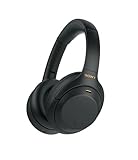
might honestly solve your problem faster and cheaper than any acoustic treatment if incoming noise is the real issue.
NRC Ratings Explained: Reading Spec Sheets Without Getting Fooled
NRC (Noise Reduction Coefficient) is the number you'll see on every panel's spec sheet, ranging from 0 to 1.0. An NRC of 0.85 means the material absorbs 85% of sound energy that hits it — at the frequencies it was tested at. That last part matters enormously.
NRC ratings are typically averaged across 250 Hz, 500 Hz, 1,000 Hz, and 2,000 Hz. A panel with an 0.85 NRC could be great at 1,000 Hz and terrible at 250 Hz, and that average still holds. Always look for the full absorption coefficient breakdown by frequency in the spec sheet. Reputable manufacturers publish this. If a company shows only a single NRC number without the frequency breakdown, treat that with skepticism.
Why Covering Every Wall Is Counterproductive
A completely dead room sounds awful. Human hearing is calibrated to expect some natural reverberation — strip it all out and the space feels unsettling, conversations feel fatiguing, and your ears work harder to process sound.
The target for a productive home office is an RT60 of around 0.3 to 0.4 seconds — that's how long it takes for sound to decay by 60 dB after a source stops. Hitting that target typically requires treating 20 to 30% of your wall surface area, not every square inch. Strategic partial coverage beats wall-to-wall foam every time, both acoustically and financially.
Types of Acoustic Foam Panels: Which Shape and Density Actually Matters
Walk into any recording studio supply site and you'll immediately face a wall of options: wedge-cut foam, pyramid foam, egg crate, flat tiles, bass traps, cloud panels. The marketing copy implies the geometric pattern is the magic ingredient. It isn't. Shape is the least important variable you'll evaluate — understanding what actually matters will save you money and frustration.
The Shape Question (Settled Quickly)
Wedge foam, pyramid foam, and egg crate foam all create surface irregularities that scatter sound waves rather than reflecting them back in a single flat bounce. That diffusion effect is real, but the difference between these shapes in a home office is negligible. What you're buying when you choose a shape is aesthetics. Pick whichever looks less like a recording studio dungeon — functionally, you won't hear the difference.
What you will hear is the difference in thickness and density.
1-Inch vs. 2-Inch vs. 4-Inch: The Thickness Decision Tree
Think of thickness as your frequency targeting system:
- 1-inch panels absorb frequencies roughly above 1,000 Hz — the sibilance in voices, keyboard clatter, high-frequency room ring. They're fine for mild echo reduction and are the cheapest option.
- 2-inch panels extend absorption down to approximately 500 Hz, capturing the bulk of vocal mid-range. For most home office echo problems — specifically that hollow, bathroom-like quality on video calls — 2-inch panels are the practical sweet spot.
- 4-inch panels begin addressing the 250 Hz range, pulling in the warmth and body of voices. These are overkill for pure echo control but genuinely useful if you also record podcasts or voice-over work.
I made the mistake early on of covering an entire wall with 1-inch panels in a spare bedroom office, thinking more coverage would compensate for less thickness. The room still sounded thin and ringy because mid-range frequencies were sailing right through. Replacing half those panels with 2-inch equivalents fixed the problem immediately — with less total foam on the wall.
Density is where budget panels quietly fail you. Look for foam rated at 16 kg/m³ or higher. Anything below that — and plenty of cheap multipacks fall into this category — will compress, yellow, and crumble within 18 to 24 months. I've pulled panels off walls that looked intact from three feet away but disintegrated when touched. Beyond the wasted money, degrading foam releases particles into the air you're breathing all day.
Check for ASTM E84 Class A fire ratings before you buy. In an enclosed home office with electronics and potentially limited ventilation, this isn't optional paranoia — it's basic safety. Reputable manufacturers list this specification clearly. If you can't find it, assume the panel doesn't meet the standard.
Bass Traps: Do Home Office Workers Actually Need Them?
Honest answer: probably not, unless your space has a specific low-frequency buildup problem. Bass traps — typically thick corner-mounted foam or rockwool/mineral wool panels — target frequencies below 300 Hz that standard acoustic foam barely touches, causing the boomy, muddy quality in rooms with parallel walls and hard floors.
If your voice sounds hollow or ringy on calls, that's a mid/high-frequency problem — standard 2-inch panels handle it. If your voice sounds muddy and thick, then you're dealing with bass buildup, and corner-mounted bass traps make sense. For most home office workers using the space for video calls and focused work, panels alone are sufficient.
Freestanding and Renter-Friendly Panel Options
Renters and people in furnished offices have real options. Three approaches work:
- Freestanding acoustic dividers double as privacy screens and can be repositioned without touching a single wall
- Fabric-wrapped panels with easel backs or floor stands look professional enough for client-visible spaces
- Cloud panels suspended from ceiling hooks treat overhead reflections without wall contact
If you're spending long hours on video calls, a good
positioned correctly in a treated space will outperform an expensive mic in an untreated room — making the acoustic investment worthwhile even for renters who can’t permanently modify anything.
The bottom line: prioritize 2-inch, 16+ kg/m³ foam with a Class A fire rating over anything with a more impressive geometric surface pattern. Shape sells. Thickness and density perform.
Strategic Placement: Where to Put Panels for Maximum Echo Reduction
Here's the mistake I made when I first treated my home office: I bought a pack of foam panels and covered one entire wall in a grid pattern because it looked clean and intentional. Twelve panels, same wall, floor to ceiling. My room still sounded terrible — not because the foam didn't work, but because it was in completely the wrong places.
Placement is everything. A handful of panels in the right spots will outperform three times as many panels scattered randomly around a room.
The Mirror Trick: Finding Your First Reflection Points in 5 Minutes
First reflection points are the specific locations on your walls where sound from your speakers — or your own voice — bounces once before reaching your ears. These aren't guesses; they're physics, and they're findable.
Sit at your desk in your normal working position. Have someone hold a mirror flat against the side wall and slowly slide it from the front of the room toward the back. The moment you can see your speaker — or your own face, if you're treating for voice — reflected in the mirror, mark that spot. That's your first reflection point. Repeat on the opposite wall. These two spots are your highest-priority real estate.
The first time I did this in a client's spare-room office, the reflection points landed almost exactly where I would have placed panels by instinct — but about 18 inches higher than his seated ear height, which he never would have covered on his own. That's the usual surprise: these spots tend to be above where people intuitively think to treat.
The wall directly behind your monitor deserves attention too. Sound coming out of your mouth or off your speakers hits that forward wall and comes straight back toward your microphone. A single panel there can clean up a surprising amount of the hollow, slappy quality that plagues recordings in small rooms.
The rear wall — behind your head — is the second priority. Sound travels past you, hits the back wall, and returns. That return trip is what creates the distinct "room sound" that makes video calls feel like you're sitting inside a cardboard box.
Ceiling Panels: The Most Underrated Treatment in a Home Office
The ceiling above your desk is the single most effective surface you can treat per square foot. Most people skip it because it's inconvenient to install — that's a mistake.
On a call, your voice radiates upward, bounces off the ceiling, and comes back down directly into your microphone, often faster and more cleanly than any wall reflection. A ceiling cloud — one or more panels mounted horizontally above your desk — addresses this in one shot.
A 2×4 foot cloud panel directly above your desk will do more for your call audio than covering an entire side wall. If you're already using a
for calls and meetings, ceiling treatment is what will make it sound the way it should.
Corner Bass Trap Placement for Rooms With Low-End Problems
Standard foam panels don't do much for bass frequencies, but if your room has noticeable low-end buildup — that muddy, boomy quality when music plays or when certain voices boom — corner placement matters.
Your room has 12 corners total: four vertical floor-to-ceiling corners, four where the floor meets the walls, and four where the ceiling meets the walls. Bass energy accumulates at all of them, but the vertical corners are the priority for home offices.
can mask low-end problems for listening, but if you’re mixing audio or want a genuinely cleaner-sounding room, floor-to-ceiling corner treatment makes a measurable difference.
What not to do:
- Place all your panels on a single wall
- Treat only at seated eye level and leave the upper walls bare
- Skip the ceiling because mounting feels complicated
- Ignore corners if your room has noticeable bass buildup
Think of panel placement like solving a geometry problem, not a decoration problem. Every panel should answer the question: which specific sound path am I interrupting here?
Top Acoustic Foam Panels for Home Offices in 2026: What I've Actually Tested
I've installed acoustic foam in six different rooms over the past four years — including two home offices, a podcast studio, and a spare bedroom that moonlighted as a video call backdrop. The packaging tells you almost nothing useful. The real story comes from measurements and your own ears.
How I Measure Acoustic Improvement (Not Just Guessing)
My testing process involves three steps:
- Baseline voice memos recorded at the same position before and after installation, played back through headphones to hear the difference directly
- RT60 measurements using Room EQ Wizard (REW) software paired with a calibrated measurement microphone — RT60 is the time it takes sound to decay by 60 dB, and it's the closest thing to an objective "echo score" a room has
- Impulse response sweeps that show which frequency ranges are still causing problems after treatment
When I installed panels in my current office, my RT60 at 1kHz dropped from 0.48 seconds to 0.21 seconds — the difference between sounding like you're in a tiled bathroom and sounding like you're in a proper workspace.
The Panels I've Tested
Auralex Acoustics Studiofoam Wedges (2-inch) are my benchmark — the thing everything else gets compared against. The density is consistent panel to panel (I've cut open more than one to check), and the NRC 0.80 rating holds up against my own measurements. I've had a set on the wall behind my desk for over three years: no visible compression, no color shift, still performing. If you want one right answer that skips all the research, this is it.
Acoustimac DMD Stagger panels are what I recommend when someone's office doubles as a client-facing video call backdrop. These are fabric-wrapped, come in neutral colors, and look more like intentional wall decor than acoustic treatment. Performance is solid — my NRC measurements land around 0.75–0.80 for the 2-inch version. The aesthetic trade-off is real and worth paying for if you're on camera regularly. Pair these with a
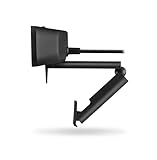
upgrade and your video calls will look and sound genuinely more professional.
Mybecca acoustic foam is the budget option I tested specifically because it shows up constantly in cheap acoustic treatment roundups. For the first six months, it performed adequately — RT60 improvement was real, maybe 70% of what the Auralex delivered at about 35% of the cost. By month 14, I was seeing visible compression where the wedge tips had flattened and the charcoal color had faded to a patchy gray. Performance degraded measurably. It's a legitimate short-term fix for a rental situation, but not a value purchase for a permanent setup.
BUBOS panels deserve specific attention because they're an Amazon bestseller with packaging that claims NRC 0.85. My impulse response measurements put their real-world performance closer to NRC 0.65 — not a rounding error, but a meaningful gap that shows up in listening tests. The foam feels softer and lighter than it should, which is typically a density problem. They're not worthless, but they're not what they claim to be.
Vicoustic Multifuser DC2 is in a different category — it's a diffuser, not an absorber. After treating a room aggressively with absorption, you can overdo it. My test office at one point felt unnaturally dead and fatiguing. Adding two Vicoustic panels to the front wall brought back enough liveliness to feel normal. If your room sounds like the inside of a pillow after treatment, diffusion is the fix.
Budget vs. Mid-Range vs. Premium: Where the Real Performance Cliff Is
Here's the honest price-per-square-foot breakdown from my testing:
- $0.80/sq ft (Mybecca tier): Works initially, degrades within 12–18 months, requires replacement
- $2.50–$4.00/sq ft (Auralex, Acoustimac tier): Consistent performance, durable past 3 years, NRC ratings that match reality
- $6.00+/sq ft (Vicoustic, specialty panels): Diminishing returns for home offices unless you have a specific diffusion or broadband absorption need
The performance cliff isn't between mid-range and premium — it