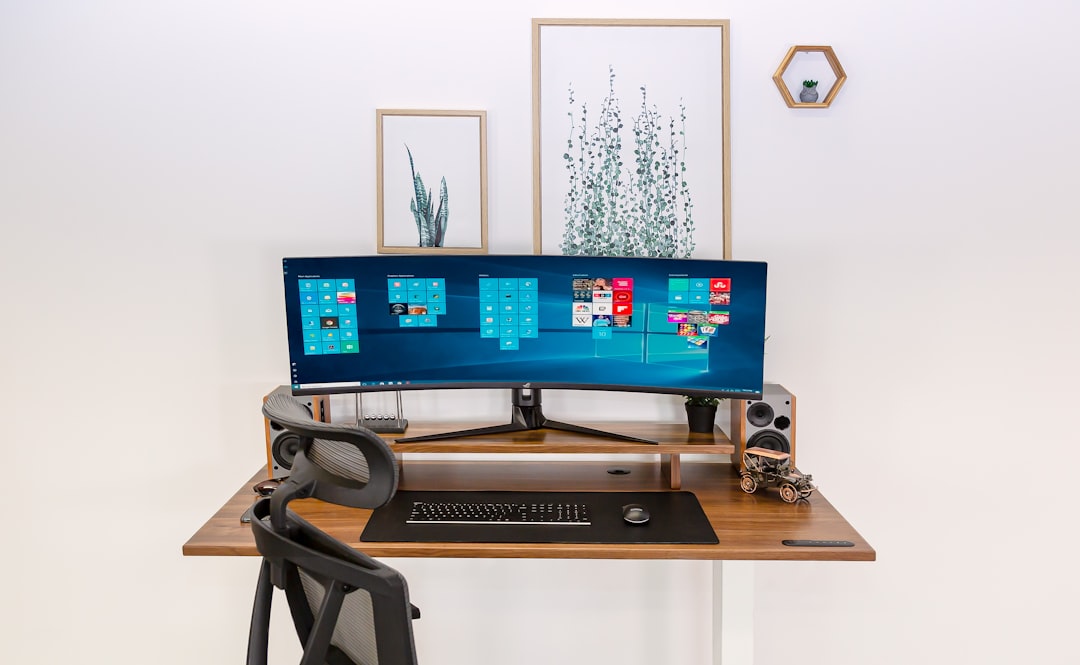
Best Adjustable Monitor Arms for Standing Desks (2026)
Introduction
Here's an irony that hits close to home: you invest in a premium

Check Price on Amazon →
to improve your posture and health, only to spend your workday craning your neck at a monitor that’s stuck at the wrong height. I’ve watched countless people make this exact mistake, and the neck pain that follows is almost predictable.
The truth is, standing desks actually demand more monitor flexibility than traditional fixed-height desks. When you're sitting, you might adjust your monitor once and forget about it for months. But the moment you start transitioning between sitting and standing throughout the day, that static monitor position becomes a real problem. Your eyes need to be level with the top third of your screen whether you're 28 inches or 42 inches off the ground—and that's a significant range to accommodate.
This is where an adjustable

Check Price on Amazon →
transforms from “nice to have” into “absolutely essential.” I’m talking about the ability to raise or lower your display by 15+ inches in a single smooth motion, tilt it to eliminate glare when you’re standing under overhead lights, and pull it closer when you need to focus or push it back when you’re on a video call. It’s the missing piece that actually makes a standing desk work the way it should.
What Makes Monitor Arms for Standing Desks Different
Not all monitor arms are created equal, and the ones designed for standing desk users have some key differences. Standard arms typically offer 10-13 inches of vertical travel—fine if you're staying seated, but woefully inadequate when you need to accommodate a 14-inch height difference between sitting and standing positions.
Arms suited for standing desks need:
- Extended vertical range (ideally 15-20+ inches)
- Smooth, effort-free adjustment mechanisms you can operate one-handed
- Solid stability that won't wobble when you raise the desk
- Reliable height memory or enough friction control that your monitor doesn't slowly drift downward
I've tested dozens of monitor arms over the years, and the difference between a budget clamp arm and a properly engineered standing desk arm is like comparing a kitchen stool to an
Check Price on Amazon →
. Both technically do the job, but only one does it well enough that you’ll actually use it correctly.
What This Guide Covers
In the following sections, I'll walk you through everything you need to know to choose the right monitor arm for your setup. We'll dig into compatibility issues—because not all standing desks play nicely with clamp or grommet mounts. I'll explain weight capacity in practical terms (spoiler: your 27-inch monitor weighs more than you think). You'll learn about range of motion, including reach depth and rotation that actually matters for real work scenarios.
Most importantly, I'll share my top recommendations across different price points and use cases, from single monitor setups to dual-display configurations. By the end, you'll know exactly which monitor arm will turn your standing desk from an ergonomic compromise into the comfortable, productive workspace it should be.
Why Standing Desks Need Adjustable Monitor Arms
Here's the uncomfortable truth about
Check Price on Amazon →
ownership: most people get the ergonomics completely wrong. You invested in a desk that moves up and down, but your monitor? It’s stuck at one height, forcing you to choose between neck pain while sitting or neck pain while standing.
The math is simple but brutal. When you transition from sitting to standing, your eye level shifts by 6 to 12 inches depending on your height and chair setup. Your fixed monitor doesn't move with you. So you end up either craning your neck down when standing or tilting your head up when sitting. After a few weeks, that persistent strain becomes the dull ache in your neck and shoulders that won't go away.
I've tested dozens of standing desk setups, and the pattern is always the same: people adjust their desk height perfectly for their elbows and keyboard, then completely ignore where they're looking. Your monitor needs to move independently from your desk surface. That's not a luxury—it's the whole point of having an adjustable workstation.
The Ergonomic Triangle: Eyes, Elbows, and Screen Distance
Proper ergonomics relies on three connected measurements that change dramatically between sitting and standing:
Eye level: The top third of your screen should sit at or slightly below eye level. When you stand up, your eyes move higher, but your monitor on a fixed stand doesn't.
Screen distance: You need 20-30 inches between your eyes and screen. When standing, people naturally lean back slightly, often increasing this distance. A
Check Price on Amazon →
lets you pull the screen closer or push it back without adjusting the entire desk.
Elbow angle: Your elbows should rest at roughly 90 degrees. Most people get this right for sitting OR standing, but rarely both. The disconnect happens when your monitor height doesn't follow your elbow height.
Without independent monitor adjustment, you're constantly compromising. Maybe you set everything perfect for sitting since that's 70% of your day. Then standing becomes uncomfortable enough that you just… stop standing. Your expensive adjustable desk becomes a very expensive fixed-height desk.
Common Mistakes People Make Without Monitor Arms
Stacking books or boxes: I've seen everything from Amazon boxes to textbooks used as makeshift monitor risers. It looks terrible, it's unstable, and you still can't adjust it when you switch positions.
Living with the tilt: Some people angle their fixed monitor up or down to compensate. This creates screen glare and still doesn't solve the distance problem.
The constant re-setup: The most dedicated folks actually move their monitor every time they adjust desk height. That's disrupting your workflow multiple times per day, and those cables aren't designed for that much handling.
Sharing spaces poorly: If multiple people use the same desk—increasingly common in hot-desking offices or shared home offices—a fixed monitor means everyone except one person is working with poor ergonomics.
The solution isn't complicated. An adjustable monitor arm takes 15 minutes to install and eliminates all these problems. You transition between sitting and standing by pressing a button on your desk and making a quick monitor adjustment. No workflow disruption, no compromises, no neck pain.
Key Features to Look for in a Standing Desk Monitor Arm
Shopping for a monitor arm when you have a
Check Price on Amazon →
requires a different checklist than picking one for a fixed-height desk. I’ve tested dozens of these, and trust me—what works great at sitting height can become a frustrating mess when you’re standing.
Height range is your number one consideration. You need at least 15-20 inches of vertical travel to comfortably transition between sitting and standing positions. Most standard monitor arms max out at 12-14 inches, which sounds like enough until you realize your monitor is now at chest level when you're standing. I learned this the hard way with my first setup.
Weight capacity matters more than you think. Most arms handle 10-35 lbs, which covers your average 24-27 inch monitor just fine. But if you're running an ultra-wide or a 32-inch display, you'll need to check the upper weight limits carefully. Under-spec your arm, and you'll spend your day constantly readjusting a drooping monitor.
Understanding VESA Mount Patterns
VESA patterns are the four-hole mounting points on the back of your monitor. The two most common patterns are 75x75mm and 100x100mm—virtually every monitor arm supports these. Larger displays (32 inches and up) might use 200x200mm or even 400x400mm patterns, so check your monitor specs before buying. I once had to return a perfectly good arm because I assumed my 34-inch ultra-wide used a standard mount. It didn't.
Gas Spring vs Mechanical Adjustment: Pros and Cons
Gas springs are the smooth operators of the monitor arm world. They use pressurized cylinders to counterbalance your monitor's weight, letting you reposition with just a gentle push. The adjustment is effortless and stays put wherever you place it. The downside? They can lose pressure over time (usually after 2-3 years), and if the tension isn't properly calibrated for your monitor's weight, you'll fight constant drift.
Mechanical springs (often using coil springs) are more old-school but incredibly reliable. They require a bit more muscle to adjust and usually involve tightening knobs or levers to lock positions. They're less elegant but practically bulletproof—I have a mechanical arm from 2018 that works exactly like it did on day one.
Clamp vs Grommet Mounting for Standing Desks
Clamp mounts attach to your desk edge and require zero drilling. They're perfect if you're renting or like to rearrange your setup. However, check your desk thickness—most clamps need 0.4 to 2.5 inches of clearance. Standing desks with control panels on the edge can be tricky here.
Grommet mounts go through a hole in your desk surface (usually 0.4-3 inches diameter). They're cleaner looking and more stable, but you're committing to a permanent hole. Some standing desks come pre-drilled with grommet holes specifically for this purpose, which is ideal.
Beyond mounting, look for comprehensive cable management systems—clips, channels, or tubes that keep your cables from becoming a tangled disaster during height changes. And make sure you're getting full articulation: +90° to -90° tilt, 360° swivel, and portrait rotation if you ever need it. The arm should also extend 20-30 inches to position your monitor at the optimal viewing distance from your eyes.
Check Price on Amazon →
Compatibility Considerations for Standing Desk Setups
Before you bolt a monitor arm to your standing desk, you need to make sure they'll actually play nice together. Standing desks introduce complications that standard fixed desks don't have—and I've learned this the hard way after testing dozens of setups.
Desktop thickness is your first checkpoint. Most monitor arm clamps accommodate desktops between 0.4 and 3.5 inches thick. Measure your desk before ordering—some budget standing desks have surprisingly thin tops (around 0.75 inches), while solid wood or butcher block surfaces can exceed 2 inches. If your desk falls outside this range, you'll need to look for arms with extended clamp ranges or consider grommet mounting instead.
The edge clearance issue catches people off guard constantly. Electric standing desks have motor housings, control boxes, and support structures lurking under the desktop. I've seen countless setups where the monitor arm clamp interferes with these components. Check what's underneath your desk edge before you buy. Some desks have their motors positioned right where you'd want to mount an arm—forcing you to mount it off-center or use a grommet hole further back.
Check Price on Amazon →
Here's something nobody tells you: lighter standing desks can wobble when you add a monitor arm, especially when extended. A 27-inch monitor on a fully extended arm creates significant leverage. If your desk weighs under 60 pounds or has a smaller footprint (under 48 inches wide), you might experience wobbling when typing—particularly at standing height. Test this before committing to the setup.

Check Price on Amazon →
Desk frame design matters more than you'd think. Some standing desks have cross-bars, support beams, or cable management cutouts that limit where you can mount a clamp. I recently tested a popular desk that had a metal support bar exactly where the monitor arm needed to go. Always check your desk's underside structure and compare it against the arm's mounting footprint.
Special Considerations for Bamboo and Laminate Desktops
Bamboo desktops are trendy right now, but they're often thinner and potentially more prone to compression damage from overtightened clamps. Use the protective pad that comes with your monitor arm, and don't crank the clamp down like you're trying to crush diamonds. Laminate desktops require similar care—the particle board underneath can crumble if you overtighten, and once that happens, you're done.
Consider placing a small metal plate or hardwood block between the clamp and desktop for extra reinforcement on softer materials.
Dealing with Standing Desk Control Panels and Obstructions
Control panels are the bane of clean monitor arm installations. They're usually positioned on the front edge exactly where you want your clamp. Your options: mount the arm off-center, use a pole mount that clears the panel, or relocate the control panel if your desk allows it (many don't).
Don't forget about cable length either. When your desk rises 20+ inches, your monitor cables need to travel that distance. Standard 3-foot cables often come up short. Budget for 6-foot cables minimum, and use

Check Price on Amazon →
solutions that move with the desk—velcro straps work better than rigid clips for this application.
Finally, check your desk depth versus arm reach. A desk positioned against a wall with a fully extended arm can result in your monitor smacking into the wall when you push it back. Measure twice, mount once.
Single vs Dual Monitor Arms for Standing Desks
Deciding between a single or dual
Check Price on Amazon →
setup comes down to your actual workflow, not just how cool a multi-monitor battlestation looks on Reddit.
When a single monitor arm makes perfect sense: If you're running a 32-inch or larger display, you probably don't need a second screen cluttering your peripheral vision. I've tested dozens of setups, and a quality ultrawide monitor on a single arm often beats dual 24-inch displays for both productivity and desk aesthetics. Single arms also shine when you're working with limited desk space—anything under 48 inches wide gets cramped fast with dual monitors.
The dual monitor advantage is real, though. Having reference material on one screen while you work on another eliminates the constant alt-tab dance. I consistently finish writing projects faster with my source documents on the left and editor on the right. Developers, video editors, and spreadsheet warriors see similar gains. The flexibility to configure monitors in different orientations (both landscape, one portrait, or even stacked) adapts to different tasks throughout your day.
Here's what most people don't consider: independent versus fixed dual arms. Independent arms give you complete freedom—each monitor adjusts separately, perfect for asymmetric setups or when you want one screen closer than the other. Fixed dual arms keep monitors locked in relationship to each other (typically side-by-side or stacked). They're cleaner looking and easier to adjust simultaneously, but you sacrifice individual positioning control.
Calculating Your Total Monitor Weight
Weight capacity isn't just about whether an arm can technically hold your monitors—it's about whether it'll hold them well. Most dual arms list capacity per arm, typically 4-10 kg (8.8-22 lbs) each.
Add up your monitor weights (check the specs, don't guess), then add 20% as a safety buffer. A pair of 27-inch monitors usually weighs around 5 kg each. If your dual arm rates 8 kg per arm, you're cutting it close—the arms will sag throughout the day as you raise and lower your
Check Price on Amazon →
.
For asymmetric setups mixing monitor sizes, the weight distribution matters more than you'd think. A 32-inch paired with a 24-inch in portrait works great, but confirm the arm's heavier side can handle the load. I've seen plenty of setups where the larger monitor slowly droops by afternoon because the arm's at its limit.
Ergonomic Positioning for Dual Monitor Setups
The biggest mistake with dual monitors? Treating them equally when you don't use them equally. Position your primary monitor directly in front of you, then angle the secondary 30-45 degrees to the side. Your neck will thank you.
For desk width, budget at least 55 inches for comfortable dual 24-inch monitors, 65+ inches for dual 27-inch displays. Any tighter and the bezels crowd together awkwardly, or monitors hang off the desk edges when angled.
Keeping monitors level during height adjustments challenges most dual arms. I test this every time: raise the desk to full standing height, then back down to sitting. Budget dual arms often need releveling because the joints don't maintain consistent tension. Look for arms with independent height locks on each side—they cost more but eliminate the constant fidgeting.
Installation and Setup Best Practices
Getting your
Check Price on Amazon →
properly installed isn’t rocket science, but rushing through it means you’ll probably end up readjusting everything later. Trust me—I’ve done this dozens of times, and spending an extra 15 minutes upfront saves hours of frustration.
Step-by-Step Installation Process
Most monitor arms ship with the hex keys you'll need, but grab a Phillips screwdriver before you start. You'll typically need it for securing the VESA plate to your monitor's back.
Choosing your mounting location matters more than you might think. Most people automatically clamp their arm to the back edge of their desk, but that's not always ideal for standing desks. Mount it 6-8 inches from the edge instead—this prevents the arm from hitting the desk frame when you raise the desk height. If you have a
Check Price on Amazon →
with a crossbar underneath, make sure your clamp won’t interfere with it.
Before tightening everything down, do a dry run. Attach the monitor loosely and move through your full range of motion. Raise your desk to standing height, lower it to sitting—make sure nothing catches or restricts movement. I learned this the hard way when I fully installed an arm only to discover it hit my desk's control box when lowered.
Adjusting Gas Spring Tension Correctly
Here's where most people struggle: getting the tension just right. Your monitor should stay wherever you position it—no drifting down, no snapping up.
Start by loosening the tension completely, then gradually tighten while testing. The adjustment point is usually a hex bolt on the arm's joint (check your manual—they're all slightly different). Make small quarter-turn adjustments. It takes patience, but you're aiming for that Goldilocks zone where the monitor glides smoothly but holds position.
If your monitor creeps downward: Tighten the tension adjustment in small increments.
If the arm feels stiff or springs up too aggressively: Loosen slightly.
Pro tip: Write down your sitting and standing monitor heights once you nail them. Use a piece of tape on your desk or just note the measurement. Your eyes should align with the top third of your screen in both positions.
Cable Management Solutions That Move With You
This is critical with standing desks. Your cables need enough slack to accommodate height changes without yanking your monitor around.
Most monitor arms include basic
Check Price on Amazon →
clips along the arm itself—use them. Create a service loop (extra cable length) near the base where the arm connects to your desk. This loop absorbs the movement when you adjust height.
I run my cables: monitor → along the arm → service loop at base → down to desk. Leave about 12 inches of extra cable in that loop. Test your full range again with cables attached—they shouldn't pull tight at any position.
Common installation headaches and fixes:
- Monitor won't stay put: Tension adjustment needed, or your monitor might be too heavy/light for that particular arm's spec
- Whole setup wobbles: Desk itself isn't stable, or clamp isn't tight enough (check monthly—they can loosen)
- Arm feels stuck: You might have over-tightened the tension or there's a shipping lock still engaged (some models have these)
The goal is effortless adjustment. If you're wrestling with your monitor to reposition it, something isn't right.
Top Adjustable Monitor Arms for Standing Desks
After testing dozens of monitor arms with various
Check Price on Amazon →
setups, I’ve found that your choice really comes down to monitor weight, desk space, and how often you’ll actually adjust the position.
Premium Pick: Ergotron LX – This is what you'll see in most professional offices for good reason. The gas spring mechanism is buttery smooth—you can literally reposition your monitor with one finger, even after months of use. It handles monitors up to 34 inches and 25 lbs, with exceptional vertical range (13 inches) that actually matters when transitioning between sitting and standing. Price hovers around $180-220, and the 10-year warranty backs up the quality.
Best Value: VIVO Single/Dual Arms – At $35-80, these punch well above their weight class. The gas spring isn't as refined as Ergotron's, but it's perfectly adequate for monitors up to 27 inches and 22 lbs. You'll need to occasionally tighten the tension adjustment, but for most people who set it once and make minor tweaks, it's solid. The dual arm version is particularly impressive at under $90.
Heavy-Duty Option: Ergotron HX – If you're running a 32-42 inch ultrawide or a gaming monitor that tips the scales, this is your answer. Rated for 42 lbs with extended reach to handle deeper monitors, it costs $350-450 but eliminates the sagging issues cheaper arms have with heavy displays. I've had mine supporting a 38-inch LG ultrawide for two years without adjustment drift.
Compact Solution: Humanscale M2.1 – The sleekest design in the category. Its minimal footprint works brilliantly on smaller desks, and the integrated cable management is actually usable (rare in this space). Handles 9-25 lbs, runs about $300-350, and the lifetime warranty reflects their confidence. The aesthetic alone justifies consideration if your workspace is visible to clients.
Budget Pick: Amazon Basics Monitor Arm – At $100, it does the job for lighter monitors (up to 25 lbs), but the height adjustment range is noticeably limited. Fine if you're staying seated most of the time, but transitions to standing require more fiddling than you'd like.
Dual Monitor Leader: Ergotron LX Dual – Around $400, but if you're serious about a two-monitor setup, nothing else compares. Each arm adjusts independently, so you can do side-by-side, stacked, or asymmetrical configurations. Works perfectly with
Check Price on Amazon →
setups too.
Ultra-Wide Specialist: North Bayou F100A/F195A – These longer arms (around $60-120) provide better weight distribution for ultrawides and prevent the "diving forward" problem cheaper arms have with deeper monitors.
What Makes Ergotron the Industry Standard
Simply put: reliability and adjustability. After hundreds of cycles, Ergotron's gas springs maintain consistent tension. Their cable management actually accommodates modern thick cables. And when something does go wrong (rarely), their warranty support actually responds. You're paying for engineering that lasts 5-10 years instead of 1-2.
When to Save Money vs When to Invest
Save money if: you have a standard 24-27 inch monitor under 20 lbs, you primarily stay seated, or you're setting up a temporary workspace. VIVO or Amazon Basics will serve you fine.
Invest more if: you're over 6 feet tall (height range matters), you have an ultrawide or heavy monitor, you frequently transition between sitting and standing, or this is your primary workspace for years to come. The frustration of readjusting a saggy arm twice daily adds up fast.
Maximizing Your Monitor Arm Investment
Getting a
Check Price on Amazon →
is just the starting point—the real value comes from dialing it in perfectly for your workflow and maintaining it properly.
The 20-20-20 Rule and Monitor Positioning
First, let's nail down ergonomics. Your screen should sit at arm's length away (about 20-28 inches), with the top of the display at or slightly below eye level. I've found that most people initially mount their monitors too high—your natural gaze should hit the upper third of the screen, not the middle.
Here's the trick for dual-height setups: Use small pieces of gaffer tape on your desk legs or wall to mark your preferred sitting and standing positions. Some monitor arms include physical stops you can set, but tape works universally. If you have a
Check Price on Amazon →
with memory presets, pair those with your monitor height marks for seamless transitions.
The 20-20-20 rule keeps your eyes happy during long sessions: every 20 minutes, look at something 20 feet away for 20 seconds. With a monitor arm, you can easily push your screen back during breaks, encouraging you to actually follow through.
Angle matters too. Tilt your monitor back 10-20 degrees from vertical—this reduces glare and neck strain. I keep a microfiber cloth nearby because once you start adjusting angles regularly, you notice every fingerprint.
Maintenance Tips That Actually Matter
Monitor arms aren't set-it-and-forget-it devices. Every few months, I do a quick tension check by moving my monitor through its full range. If it's drooping or too stiff, there's usually a hex key adjustment point on the joints. Don't wait until your monitor slowly sinks during a video call—been there, looked unprofessional.
Keep the joints moving. If you only adjust your arm once a week, the gas springs can develop stiff spots. I make it a habit to reposition my screen a few times daily, even just rotating it or moving it closer for detail work.
For cleaning, avoid spraying anything directly on the joints. A damp cloth works fine for the arms, and compressed air clears out desk dust from the mounting points.
Accessories Worth Adding to Your Setup
Laptop tray attachments transform your setup if you work across multiple devices. They typically clip onto the VESA mount or arm pole, putting your laptop at the same height as your main display. Just verify your arm's weight capacity can handle both—most budget arms max out around 20 pounds total.
The rotation and pivot features often go underused. Portrait mode is genuinely useful for coding, reading long documents, or Twitter. I rotate my secondary monitor vertically daily, and the quick-release on quality arms makes this effortless.
Check Price on Amazon →
Regarding warranties: In my experience, Ergotron and Humanscale have responsive customer service and actually honor their warranties. Budget brands? Mixed results. Save your purchase receipt and installation photos—some companies require proof of proper installation before approving claims. The peace of mind from a solid 10-year warranty legitimately justifies spending more upfront.
Frequently Asked Questions
Can any monitor arm work with a standing desk?
Most monitor arms are technically compatible, but standing desks require specific features. Need extended vertical range (15-20+ inches) to accommodate both sitting and standing heights. Clamp must fit your desk thickness and clear any edge obstructions like motor housing. Gas spring arms work best for quick transitions between positions. Check your desk's weight capacity and stability with added monitor arm leverage.
How much height adjustment do I really need for a standing desk?
Minimum 15 inches of vertical travel to cover typical sitting-to-standing transition. 20+ inches ideal for accommodating different users or extreme height differences. Calculate your specific need: measure eye level when sitting vs standing. Remember monitors should be positioned with top of screen at or slightly below eye level. More range gives flexibility for tasks requiring different viewing angles (reading vs video editing).
Will a monitor arm damage my standing desk surface?
Clamp-style mounts distribute pressure over wide area and include protective padding. Risk is minimal with solid wood, bamboo, or quality laminate desks (0.75+ inches thick). Thin or hollow-core desks may show indentation over time. Grommet mounts eliminate surface pressure but require drilling a hole. Use mounting plate or reinforcement under thin desktops to distribute load. Regularly check and adjust clamp tension to prevent over-tightening.
Should I get a gas spring or mechanical spring monitor arm?
Gas springs offer effortless, smooth height adjustment with one hand (ideal for frequent transitions). Mechanical springs cost less but require more force to adjust and may drift over time. Gas springs better for heavier monitors (20+ lbs) and standing desk workflows. Quality gas springs (like Ergotron) last 10+ years without losing tension. Mechanical acceptable for budget setups or monitors that stay in fixed positions most of the time.
Can I install a monitor arm if my standing desk has a motor housing or control panel on the edge?
Yes, but requires careful positioning to avoid obstructions. Offset the clamp position away from motor housing (most arms have 3-5 inch clamp range). Some standing desks have dedicated mounting zones designed to clear components. Grommet mounting provides more flexibility in placement if desk allows drilling. Check your specific desk model's manual for recommended monitor arm placement zones. Worst case: use a spacer or mounting plate to extend clamp past obstructions.