Ring Light for Video Calls and Streaming: Complete Guide
Why Ring Lights Transform Video Call and Streaming Quality
Anyone who’s joined a video call from their dimly lit home office knows the struggle: you look washed out, tired, or like you’re calling from a cave. Ring lights solve this problem through simple physics—and the difference is immediate and dramatic.
The Science Behind Ring Lights
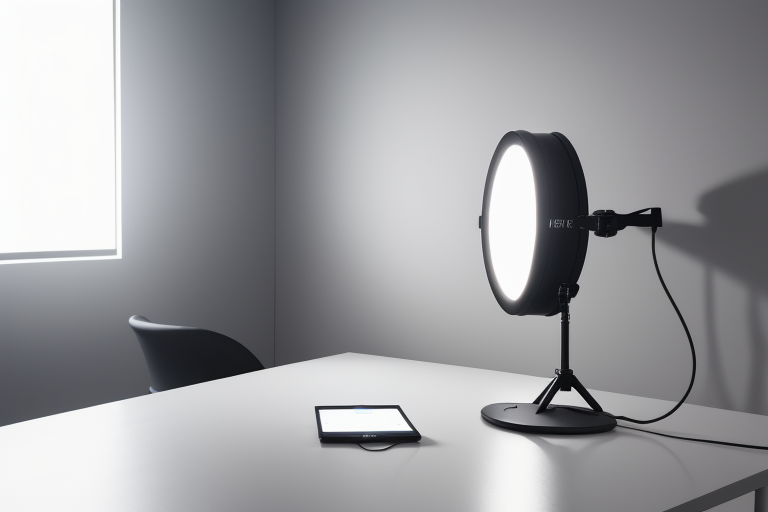
Ring lights work by creating a circular light source that surrounds your camera lens. This design produces even, diffused illumination that wraps around your face from all angles. Unlike a single point light source, this circular approach eliminates harsh shadows under your eyes, nose, and chin. Those unflattering dark circles? Gone. The hollow center means the light comes directly from where the camera sees you, filling in every shadow that normally makes you look exhausted during early morning standups.
The diffused quality matters too. Most ring lights use multiple LED bulbs behind a frosted cover, which softens the light and prevents that harsh, interrogation-room look you get from bare bulbs.
The Professional Perception Problem
Here’s the reality: people judge your competence based on your video quality. In a recent meeting scenario, imagine two candidates interviewing remotely. Candidate A appears grainy, with half their face in shadow from overhead lighting. Candidate B has clear, evenly-lit features with accurate colors. Who seems more prepared and professional?
Poor lighting triggers auto-exposure struggles in your webcam. The camera compensates for dim conditions by boosting ISO, which introduces that ugly grain and noise. Your video becomes a pixelated mess, especially in movement. With proper ring light illumination, your camera’s sensor gets plenty of light data to work with, producing crisp, clean video.
Check Price on Amazon →
Ring Lights vs Other Light Sources
Natural window light seems ideal—when it cooperates. But clouds roll in, the sun moves throughout the day, and you’re stuck repositioning constantly. Window light also comes from one direction, creating shadows on one side of your face.
Overhead ceiling lights are possibly the worst option. They cast shadows downward, creating dark eye sockets and emphasizing every wrinkle and blemish. They’re designed to illuminate rooms, not faces.
Ring lights deliver consistent, controllable illumination regardless of time of day or weather. Modern models let you adjust both brightness and color temperature, so you can match any environment.
Real Improvements You’ll Notice Immediately
When you switch to a ring light, several changes happen at once:
- Skin tone accuracy improves dramatically—no more looking yellow, gray, or weirdly pink
- Eye strain decreases because you’re not squinting into a dim screen in a dark room
- Camera auto-exposure stabilizes, eliminating that annoying brightness fluctuation when you move
- Facial features appear more defined without harsh shadows
- Makeup and details render properly instead of washing out or disappearing
Why Professionals Won’t Go Back
Talk to any content creator or remote worker who’s invested in a ring light, and you’ll hear the same thing: it’s become non-negotiable equipment. The quality difference is too significant to ignore, especially when your career depends on virtual presence. For the cost of a few coffee shop trips, you gain a professional setup that works every single time you click “join meeting.”