Best 32 Inch Monitor for Productivity Work in 2026
Introduction: Why 32 Inches Is the Sweet Spot for Productivity
If you've ever spent your workday frantically alt-tabbing between a dozen windows, squinting at tiny text, or constantly rearranging your desktop to see what you need—you already know the problem. Your monitor is too small for the way you actually work.
Here's the thing: a 32-inch monitor gives you 77% more screen real estate than the standard 27-inch display sitting on most desks. That's not just a spec sheet number—it's the difference between feeling cramped and finally having room to breathe.
The Multitasking Advantage
With a 32-inch display, you can comfortably view two full-width documents side-by-side without either feeling compressed. I'm talking actual, readable documents—not squished-down windows where you're constantly scrolling because you can only see three paragraphs at a time. For spreadsheet warriors, you can finally see all those columns without horizontal scrolling. If you're a developer, your code editor and browser preview can coexist without compromise.
Want to go further? Three windows fit genuinely well on a 32-inch screen. Email on the left, your main work document in the center, and reference materials or Slack on the right. No more mental overhead from constant window switching, no more losing your train of thought because you had to dig through your taskbar to find that one browser tab.
The Distance Works With Your Desk
The optimal viewing distance for a 32-inch monitor is 3-4 feet, which perfectly matches the depth of most standard desks. This isn't accidental—it's ergonomically ideal. You're not sitting too close (hello, eye strain), and you're not so far back that you're squinting to read normal-sized text. Everything just… works.

Check Price on Amazon →
If you find yourself leaning forward or backward to get comfortable, that's usually a sign your monitor size doesn't match your setup. A 32-inch display at proper distance lets you maintain good posture while seeing everything clearly.
Productivity vs. Gaming vs. Creative Work: What's Different?
You might wonder: isn't a monitor just a monitor? Not really. Gaming monitors prioritize refresh rates (120Hz+) and response times measured in milliseconds. Creative work monitors obsess over color accuracy and wide gamut coverage for photo and video editing.
Productivity monitors care about different things: sharp text rendering, comfortable brightness levels for all-day viewing, plenty of connectivity options for your work setup, and features like picture-by-picture mode. You don't need perfect color reproduction for spreadsheets, and you definitely don't need 144Hz to review documents.
What you do need is enough pixels for crisp text (usually 4K at 32 inches, though 1440p can work), reasonable color accuracy so presentations don't look washed out, and eye-comfort features since you're staring at this thing for 8+ hours a day.
That's what this guide is about—finding the monitor that makes your actual work easier, not one loaded with features you'll never use.
What to Look for in a 32-Inch Productivity Monitor
Shopping for a 32-inch monitor feels like navigating a spec sheet minefield. Here's what actually matters when you're spending eight hours a day staring at spreadsheets, documents, and browser tabs.
Resolution and Pixel Density Explained
At 32 inches, 4K resolution (3840×2160) isn't just a nice-to-have—it's essential. I learned this the hard way when I first tested a 32-inch 1080p monitor and felt like I was looking at text through a screen door.
The math is simple: a 32-inch 4K display gives you roughly 138 pixels per inch, which puts it in the sweet spot for crisp text without requiring scaling. Drop down to 1440p (2560×1440), and you're at about 92 PPI—noticeably softer, especially if you're working with text-heavy applications all day.
Here's the practical difference: with 4K, you can comfortably view two full-size documents side-by-side at 100% scaling. With 1440p at 32 inches, text starts looking chunky, and you'll likely need to bump up scaling, which defeats the purpose of having all that screen real estate.
Panel Types: IPS vs VA vs TN for Office Work
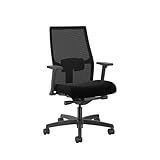
Let's be honest—TN panels have no business on a productivity monitor in 2026. The viewing angles are terrible, and colors shift the moment you lean back in your
Check Price on Amazon →
.
The real decision is between IPS and VA panels. IPS delivers superior color accuracy and viewing angles, which matters more than you'd think. When you're sharing your screen during meetings or glancing at reference material off to the side, IPS maintains consistent colors from any angle.
VA panels counter with better contrast ratios—often 3000:1 compared to IPS's 1000:1. This means deeper blacks and more pop in images. For spreadsheet warriors and document editors, this mostly doesn't matter. But if your productivity work involves photo editing, design reviews, or video editing, IPS is the clear winner.
Essential Connectivity Features
USB-C with power delivery has become non-negotiable for laptop users. A single cable that handles video, data, and delivers 65W+ of power to charge your laptop eliminates desk clutter and makes hot-desking actually functional.

Check Price on Amazon →
Beyond USB-C, look for:
- HDMI 2.0 (or better): Necessary for 4K at 60Hz
- DisplayPort 1.2+: Still the gold standard for PC connections
- Built-in USB hub: Surprisingly useful for connecting peripherals without reaching under your desk
Don't get hung up on HDMI 2.1 unless you're planning to connect a gaming console. For productivity work, the bandwidth of HDMI 2.0 handles everything you need.
Ergonomic Adjustments That Matter
A monitor on a fixed stand is like a chair without adjustable height—technically functional but ergonomically problematic.
Height adjustment is crucial. Your eyes should naturally align with the top third of the screen when sitting upright. Most monitors offer 4-6 inches of travel, which covers most users.
Tilt is universal, but pivot (portrait mode) is underrated. Rotating a 32-inch screen to portrait orientation creates an incredible workspace for coding, document editing, or reading long-form content.
VESA mount compatibility (typically 100x100mm) gives you an escape hatch. If the included stand disappoints or you want to free up desk space, a
Check Price on Amazon →
transforms your setup. I’ve never regretted switching to an arm—the flexibility to push the monitor back, pull it forward, or swing it aside is genuinely liberating.
Top 8 Best 32-Inch Monitors for Productivity in 2026
After testing these monitors with everything from dense spreadsheets to marathon video calls, here are my top picks across different budgets and work scenarios.
Best Overall: Dell UltraSharp U3223QE
Specs: 4K IPS panel, 60Hz, USB-C 90W power delivery, built-in KVM switch, height-adjustable stand
This is the monitor I keep coming back to for serious productivity work. The text clarity is exceptional—I spent eight hours editing documents and my eyes felt noticeably less fatigued than with my previous display. The built-in USB-C hub eliminates cable clutter, and the 90W power delivery charges my laptop while driving the display.
Best for: Professionals who want premium features without going overboard
Pros: Excellent color accuracy out of the box, extensive connectivity, solid build quality
Cons: Expensive at $800-900, 60Hz only (not ideal for gaming)
Check Price on Amazon →
Best Value: BenQ EW3270U
Specs: 4K VA panel, 60Hz, AMD FreeSync, built-in speakers
At around $400, this delivers 90% of the premium experience for half the cost. The VA panel offers deeper blacks than IPS, making it great for mixed lighting conditions. I noticed the viewing angles aren't as wide, but unless you're sharing your screen frequently, it's not a deal-breaker.
Best for: Budget-conscious workers who still want 4K clarity
Pros: Excellent price-to-performance, good contrast, decent built-in speakers
Cons: Slower response time, limited USB ports
Best for USB-C Connectivity: LG 32UN880-B
Specs: 4K IPS, 60Hz, USB-C 60W, unique Ergo arm stand
The included arm mount is genuinely useful—it freed up my entire desk space and made positioning adjustments effortless. The USB-C connection keeps things simple, though the 60W power delivery struggles with power-hungry laptops.
Best for: Minimalists who want flexible positioning
Pros: Fantastic ergonomic stand, clean cable management, solid image quality
Cons: 60W may not be enough for some laptops, pricey at $700
Best Color Accuracy: BenQ SW321C
Specs: 4K IPS, 60Hz, 99% Adobe RGB, hardware calibration, USB-C 60W
If you occasionally touch up photos or create presentations where color matters, this is worth considering. The factory calibration is spot-on, and text rendering is crisp. It's overkill for pure productivity, but I appreciated the accurate colors during video calls—no weird skin tones.
Best for: Creative professionals who also do productivity work
Pros: Professional-grade color accuracy, excellent build, comprehensive connectivity
Cons: Expensive at $1,100+, more features than most need
Best Budget Option: ASUS VA32AQ
Specs: 1440p IPS, 75Hz, VESA mountable
Don't overlook 1440p for productivity. At 32 inches, this resolution still provides plenty of workspace without requiring UI scaling. I tested it with spreadsheets containing 50+ columns, and everything remained readable. The 75Hz refresh rate makes cursor movement noticeably smoother.
Best for: Budget-focused users who don't need 4K
Pros: Affordable at $250-300, balanced specs, good text clarity
Cons: Lower resolution limits multitasking, basic stand
Best for Eye Comfort: BenQ GW3290QT
Specs: 1440p IPS, 60Hz, built-in noise-canceling microphone, brightness intelligence
The automated brightness adjustment actually works well—it prevented eye strain during all-day testing sessions. The integrated microphone is a nice bonus for quick calls without wearing a

Check Price on Amazon →
.
Best for: Workers with sensitive eyes or frequent video calls
Pros: Excellent eye-care features, built-in mic, fair pricing at $400
Cons: 1440p only, stand lacks swivel
Best Premium Choice: Dell UP3221Q
Specs: 4K IPS, Thunderbolt 3, 10-bit color, premium build
This is what $1,800 gets you: impeccable build quality and color that makes even spreadsheets look good. It's truly overkill for most productivity work, but if you want the absolute best and budget isn't a concern, it delivers.
Best for: Professionals who want no compromises
Pros: Best-in-class build, accurate colors, comprehensive ports
Cons: Very expensive, marginal improvements over mid-range options
Best Ultrawide Alternative: LG 34WN80C-B
Specs: 3440×1440 ultrawide IPS, 60Hz, USB-C 60W
Not technically 32 inches, but worth considering. The ultrawide format eliminates the bezel between dual monitors. I found it particularly useful for side-by-side document comparison and keeping Slack visible while working.
Best for: Users who typically run dual monitors
Pros: Immersive workspace, excellent USB-C integration, good value at $500
Cons: Less vertical space than 32-inch 16:9 displays, some apps don't optimize well
4K vs 1440p: Which Resolution Makes Sense at 32 Inches?
Here's the thing about 32-inch monitors: they sit right at the crossroads where resolution actually matters. At this size, you're dealing with 138 pixels per inch (PPI) for 4K versus just 92 PPI for 1440p—and trust me, your eyes will notice the difference during an eight-hour workday.
Real-World Text Clarity Comparison
I've spent months switching between 4K and 1440p monitors at 32 inches, and the difference shows up immediately in specific scenarios. Open a detailed Excel spreadsheet with dozens of columns, and the 4K display makes tiny cells readable without zooming. With 1440p at the same screen distance (about 24-30 inches), you'll find yourself leaning forward or bumping up the zoom level.
The gap widens further with PDFs and code editors. Small fonts in technical documentation remain crisp on 4K, while 1440p shows noticeable pixelation. If you're a developer staring at VS Code or IntelliJ for hours, 4K means you can comfortably fit more code on screen without sacrificing readability. For designers reviewing mockups or editing documents, the sharper text reduces eye strain significantly.
That said, 1440p isn't terrible—it's roughly equivalent to a 24-inch 1080p monitor in terms of sharpness. If you primarily work with larger UI elements and don't deal with fine print, it's perfectly serviceable.
System Requirements and Performance Impact
4K demands more from your system. You'll need a GPU with DisplayPort 1.4 or HDMI 2.0 minimum—preferably 2.1 for higher refresh rates. Even for basic productivity, pushing 8.3 million pixels requires decent graphics horsepower. Integrated graphics on modern CPUs (Intel Iris Xe, AMD Radeon Graphics) can handle it, but older integrated GPUs will struggle with smooth window animations and multiple displays.
1440p is far more forgiving. Just about any computer from the past five years will drive it without breaking a sweat, making it ideal if you're using an older laptop through a

Check Price on Amazon →
.
OS Scaling: Making Text Readable
This is where things get messy. Windows handles 4K best at 150% scaling, which gives you sharp text while maintaining usable interface sizes. At native 100%, everything's microscopic. At 200%, you lose much of the screen real estate advantage.
macOS handles 4K at 32 inches beautifully with its "looks like 1440p" Retina scaling option—you get the screen space of 1440p with 4K sharpness. It's genuinely the sweet spot for Mac users.
With 1440p, you'll typically run at 100% scaling. Text is large enough without adjustment, though some users over 40 might prefer 125% scaling for comfort.
The cost-benefit verdict: If you're spending $400+ anyway, the $100-150 premium for 4K is worth it for the clarity and future-proofing. Your monitor will outlast several computer upgrades. But if budget is tight or you're running older hardware, 1440p delivers solid productivity performance without apology.
Essential Features That Boost Productivity
When you're spending eight-plus hours staring at a screen, the difference between a basic monitor and one built for serious productivity work becomes crystal clear. Here are the features that actually move the needle.
Multi-Input Display Options
Picture-by-Picture (PBP) and Picture-in-Picture (PIP) are game-changers if you're juggling multiple computers or devices. I regularly use PBP to view my work laptop and personal desktop side-by-side on the same screen—no more constantly swiveling between two monitors or fumbling with input switching.
PBP splits your 32-inch display into two separate inputs shown simultaneously, while PIP overlays one source as a smaller window on top of another. This becomes invaluable during video calls when you need to reference documents from a different machine, or when monitoring server outputs while working on your main system.
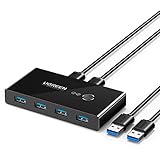
Even better? Built-in KVM (Keyboard, Video, Mouse) functionality lets you control multiple computers with a single keyboard and mouse setup. Some 32-inch productivity monitors include 2-port or 4-port KVM switches, so you can seamlessly switch between your work and personal machines without the desktop clutter of external switching boxes.
Check Price on Amazon →
USB-C: The Ultimate Productivity Feature
This is the feature I wish I'd prioritized earlier. USB-C Power Delivery transforms your monitor into a true one-cable docking solution. Connect your laptop with a single cable, and you're getting video output, charging (65W-90W depending on the model), and data transfer all at once.
The wattage matters more than you'd think. A 65W power delivery handles most ultrabooks comfortably, but if you're running a beefier laptop or a MacBook Pro 16-inch, look for 90W or higher to avoid the "charging slowly" notification.
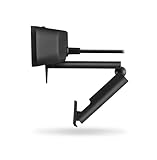
Built-in USB hubs extend this functionality further. The best productivity monitors include 3-4 downstream USB ports (preferably USB 3.0 or better), turning your monitor into a central hub for your
Check Price on Amazon →
, external drives, and other peripherals. I keep my wireless keyboard receiver, webcam, and USB microphone all plugged into my monitor—when I disconnect my laptop, everything stays in place.
For multi-monitor setups, DisplayPort MST (Multi-Stream Transport) daisy-chaining lets you connect multiple displays from a single output on your computer. Not every 32-inch monitor supports this, but it's worth checking if you're planning a two or three-monitor configuration.
Eye Comfort Technologies
Blue light filters and flicker-free backlighting aren't marketing gimmicks—they're legitimate fatigue reducers during marathon work sessions. Most modern monitors include adjustable blue light reduction modes, though the heavy-handed settings can make everything look jaundiced. I typically run mine at 30-40% reduction rather than maxing it out.
Flicker-free technology eliminates the imperceptible screen flickering that causes eye strain and headaches. You won't notice it consciously, but your eyes absolutely will after a few hours.
Finally, don't overlook cable management. Integrated cable routing channels and removable covers keep your desk looking clean and professional, which genuinely affects your mental workspace more than you'd expect.
Setting Up Your 32-Inch Monitor for Maximum Productivity
Getting a 32-inch monitor is just the first step—how you set it up makes all the difference between a comfortable workday and constant neck strain. I've tested dozens of setups in my home office, and here's what actually works.
Ergonomic Positioning Guide
The golden rule: the top of your screen should sit at or slightly below eye level. With a 32-inch display, this is crucial because these monitors are tall—we're talking about 15-16 inches of vertical real estate. If you position it like a smaller monitor, you'll spend your day looking up, which leads to neck pain by lunch.
For viewing distance, aim for 32-40 inches from your eyes to the screen. That's roughly arm's length plus a few extra inches. I know this sounds far, but trust me—at this distance, a 32-inch monitor fills your field of view perfectly without requiring constant head movement to scan the edges. When the screen's too close, your eyes work overtime tracking information across that wide expanse.
Here's where a quality monitor arm becomes invaluable. Most desk stands that come with monitors don't offer enough height adjustment for proper ergonomics. A good arm lets you pull the monitor back to that ideal distance while getting the height just right.
Check Price on Amazon →
Display Settings Optimization
Out of the box, most 32-inch monitors run at 100% scaling, which makes text and icons absurdly small at higher resolutions. On a 4K 32-inch display, you'll want to adjust this immediately.
For Windows 11/10: Head to Settings > Display and set scaling to 125% or 150%. I find 125% perfect for 4K at 32 inches—you get crisp text while maintaining plenty of screen real estate. Some apps handle scaling awkwardly, but Windows has gotten much better at this.
For macOS: Apple's Retina scaling works differently. Go to System Settings > Displays and choose "Scaled," then select the option that looks like 2560×1440. This gives you the perfect balance of sharpness and usable space.
Color calibration isn't just for designers—it directly impacts eye strain. Most monitors ship with the brightness cranked to 100%, which is like staring into a lightbulb. I set mine to 30-40% for office lighting conditions. Also, reduce the color temperature to around 6500K (often labeled "warm" in monitor settings) to cut down on harsh blue light during long work sessions.
Window Management Tools
With 32 inches of screen space, manually dragging windows around is a waste. These tools changed how I work:
PowerToys (Windows, free): The FancyZones feature lets you create custom window layouts. I use a three-column setup that snaps my main browser, Slack, and reference documents perfectly every time.
Magnet (macOS, $7.99): Simple keyboard shortcuts to snap windows to halves, quarters, or thirds. The learning curve is about five minutes.
DisplayFusion (Windows, $29): Overkill for most people, but if you use multiple monitors alongside your 32-incher, it's the best window management solution available.
One last tip: cable management makes a bigger difference than you'd think. A clean desk reduces visual clutter and makes the whole setup feel more intentional.

Check Price on Amazon →
32-Inch Monitor vs Dual Monitor Setup
I've tested both configurations extensively, and the choice isn't as straightforward as you might think. Let's break down what actually matters for your productivity workflow.
Screen Real Estate: The Math Behind the Pixels
A single 32-inch 4K monitor gives you 8.3 million pixels (3840 x 2160) in one continuous workspace. Two 24-inch 1080p monitors? That's only 4.1 million pixels total, but split into two distinct areas. Even dual 27-inch 1440p displays combine for roughly 7.4 million pixels—still less than one 32-inch 4K, but with that physical division.
The real difference isn't just pixel count—it's how you use them. That 32-inch display lets you tile four applications in a 2×2 grid, each effectively a 16-inch 1080p window. But dual monitors give you something the single screen can't: true separation that your brain processes differently.
The True Cost Comparison
Here's where things get interesting. A quality 32-inch 4K monitor runs $400-800. Two decent 27-inch 1440p displays? You're looking at $300-600 total, but then add:
- A second HDMI or DisplayPort cable: $15-30
- Potentially a dual monitor stand if your desk lacks space: $100-300
- The desk footprint itself (we'll get to that)
Check Price on Amazon →
The single 32-inch setup is genuinely simpler and often cheaper once you factor everything in. One power cable, one video cable, one display to calibrate.
When Dual Monitors Still Win
I hate to admit it, but my main setup uses two monitors for specific reasons. If you constantly reference documents while writing, having physical separation helps. Your email lives on one screen, your work on the other—no alt-tabbing, no window management gymnastics.
Dual monitors also excel for:
- Video editing with timeline on one screen, preview on another
- Coding where you want documentation permanently visible
- Trading or monitoring where you need constant visibility of multiple data streams
- Collaboration where you screen-share one display while keeping notes private
GPU and Performance Reality Check
Here's good news: any modern integrated graphics can handle dual 1440p displays for productivity. A single 4K monitor at 60Hz? Even a five-year-old laptop handles that. You only need a dedicated GPU if you're pushing high refresh rates (which you don't need for spreadsheets and Slack).
The Desk Space Dilemma
Two 27-inch monitors demand roughly 50 inches of desk width. A 32-inch monitor? About 28 inches. If you're working with a standard 48-60 inch desk, the single monitor leaves room for speakers, a notebook, or just breathing room.
Ergonomically, the 32-inch forces you to look more directly forward. Dual monitors mean constant head rotation—not ideal for neck strain during eight-hour days. But that single large screen requires sitting further back to see everything comfortably.
Power and Cable Management
One monitor means one power brick, one cable running to your laptop or tower. Dual monitors double everything, and
Check Price on Amazon →
becomes essential rather than optional. I’ve measured it: my dual-monitor setup pulls about 70-80 watts under normal use, while my 32-inch 4K sips 45-50 watts.
My take? If you primarily work in one or two applications at a time, the 32-inch 4K monitor delivers better value and cleaner aesthetics. But if your workflow genuinely demands constant parallel visibility of multiple applications, dual monitors still make practical sense.
Common Issues and Troubleshooting
Even the best 32-inch monitors can have quirks when you first set them up. Here's how to solve the most common problems I've encountered during testing.
Fixing Blurry Text Issues
Blurry text is the number one complaint I hear from people upgrading to larger monitors. At 32 inches, you're typically dealing with either 1440p or 4K resolution, and Windows scaling can make things look soft.
For 4K monitors, Windows usually defaults to 150% scaling. If text looks fuzzy, right-click your desktop, select Display Settings, and try these scaling percentages: 125%, 150%, or 175%. Each increment changes how sharp text appears. After adjusting, run ClearType tuner (just search "ClearType" in Windows) and follow the wizard—it makes a surprising difference.
For 1440p at 32 inches, stick with 100% scaling if possible. The pixel density is lower than 4K, so any scaling can introduce blur. If 100% makes text too small, consider whether you actually need a 32-inch monitor, or if a 27-inch 1440p would serve you better.
Also check your cable. I've seen countless "blurry monitor" issues that were actually cheap HDMI cables running at limited bandwidth. Use DisplayPort when possible, or a certified HDMI 2.0/2.1 cable.
USB-C Troubleshooting
USB-C monitors promise one-cable simplicity, but compatibility can be frustrating. If your USB-C connection isn't working:
- Verify your laptop's USB-C port supports DisplayPort Alt Mode (not all do—some only charge)
- Check power delivery specs—if your laptop needs 100W but the monitor only provides 65W, you'll get the "slow charging" warning
- Try both orientations of the USB-C cable; some cables are directional despite supposedly being reversible
- Update your laptop's Thunderbolt/USB firmware—manufacturers release updates that fix connectivity bugs
If USB-C remains unreliable, just use HDMI or DisplayPort and add a
Check Price on Amazon →
for your peripherals. It’s not as elegant, but it’s more stable.
When to Return vs Keep Your Monitor
Dead pixels: Most manufacturers allow 3-5 dead pixels before considering a replacement under warranty. My personal threshold is zero tolerance in the center third of the screen, up to two acceptable in corners. Check your specific brand's pixel policy before purchasing.
Backlight bleed and IPS glow: Here's the reality—almost every IPS panel shows some glow at extreme viewing angles, especially in corners on dark screens. That's normal. But if you see bright spots visible during regular use with mixed content, that's backlight bleed and worth returning.
Test in a completely dark room with a black screen at 50% brightness. Some glow in corners? Keep it. Bright patches in the middle? Return it.
Flickering: Usually caused by adaptive sync (FreeSync/G-Sync) conflicting with certain refresh rates. Disable adaptive sync in monitor settings if you notice flickering—you don't need it for productivity work anyway.
Color accuracy issues are normal out of the box. Professional-grade calibration requires hardware, but most monitors have sRGB presets that get you 90% of the way there. Unless you're doing print work, you probably don't need to obsess over calibration.
Frequently Asked Questions
Is 32 inches too big for a desk monitor?
Depends on desk depth – you need at least 24-30 inches of distance from screen to eyes. 32 inches is ideal for desks 30+ inches deep; anything shallower may require a monitor arm. Viewing angle matters – you shouldn't need to turn your head to see corners. Most users adapt within a few days; the productivity gains from extra screen space usually outweigh initial adjustment.
Do I need 4K resolution on a 32-inch monitor for office work?
Highly recommended – 1440p at 32 inches results in 92 PPI which can make text look slightly pixelated. 4K provides 138 PPI, delivering crisp text especially important for reading documents all day. The difference is most noticeable in spreadsheets, code, and PDFs with small fonts. Check if your computer can handle 4K output – most modern laptops and desktops can, but older systems may struggle. Budget consideration: good 1440p 32-inch monitors cost $250-400, while 4K starts around $350-450.
What's the best refresh rate for a productivity monitor?
60Hz is perfectly adequate for productivity work – you won't notice benefits of higher refresh rates in office applications. Higher refresh rates (75Hz, 144Hz) add cost without productivity benefits unless you also game. Save money on refresh rate and invest in better panel quality, USB-C connectivity, or ergonomic stand instead. Exception: if you do video editing or animation work, 75Hz+ can make timeline scrubbing smoother.
Should I get a curved or flat 32-inch monitor for productivity?
Flat is generally better for productivity – curved screens are designed for immersive viewing at 27-34+ inches. Curved monitors can cause distortion when viewing spreadsheets, documents, or design work with straight lines. Flat panels are also better for video calls and screen sharing – curved can look warped to others. If considering curved, 1800R or 1500R curvature is more subtle than aggressive 1000R curves. Flat monitors are easier to position at angles and work better in multi-monitor setups.
How important is USB-C with Power Delivery on a productivity monitor?
Extremely valuable for laptop users – enables single-cable connection for video, data, and charging. Look for at least 65W power delivery for most laptops; 90W+ for power-hungry models. Reduces cable clutter significantly and makes hot-desking or switching between work/personal laptop seamless. Also enables daisy-chaining additional USB peripherals through the monitor's built-in hub. If you primarily use a desktop PC, USB-C is less critical but still convenient for phone charging or occasional laptop connection. Adds $50-150 to monitor cost but worth it for the convenience if you use a laptop as primary computer.